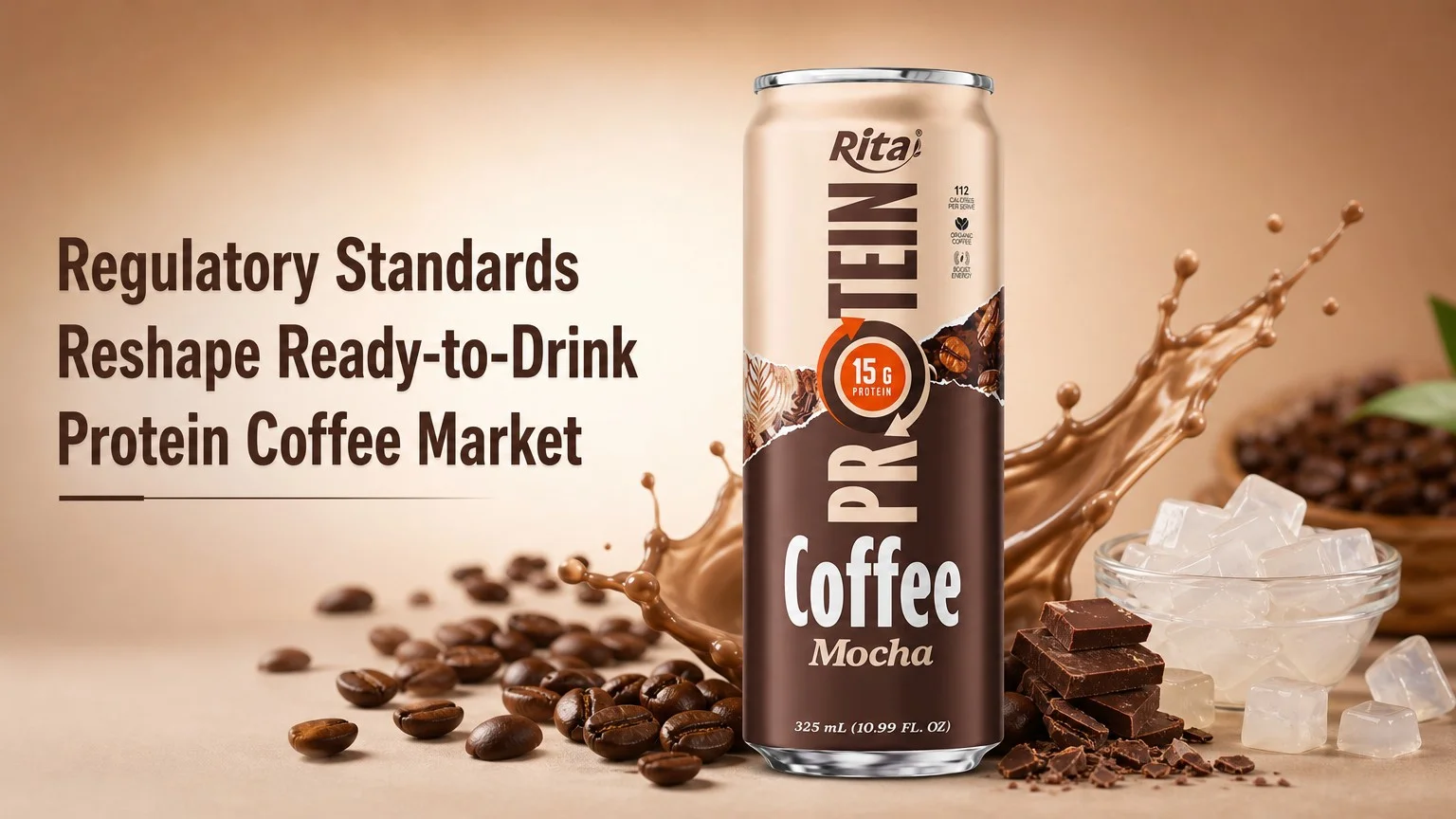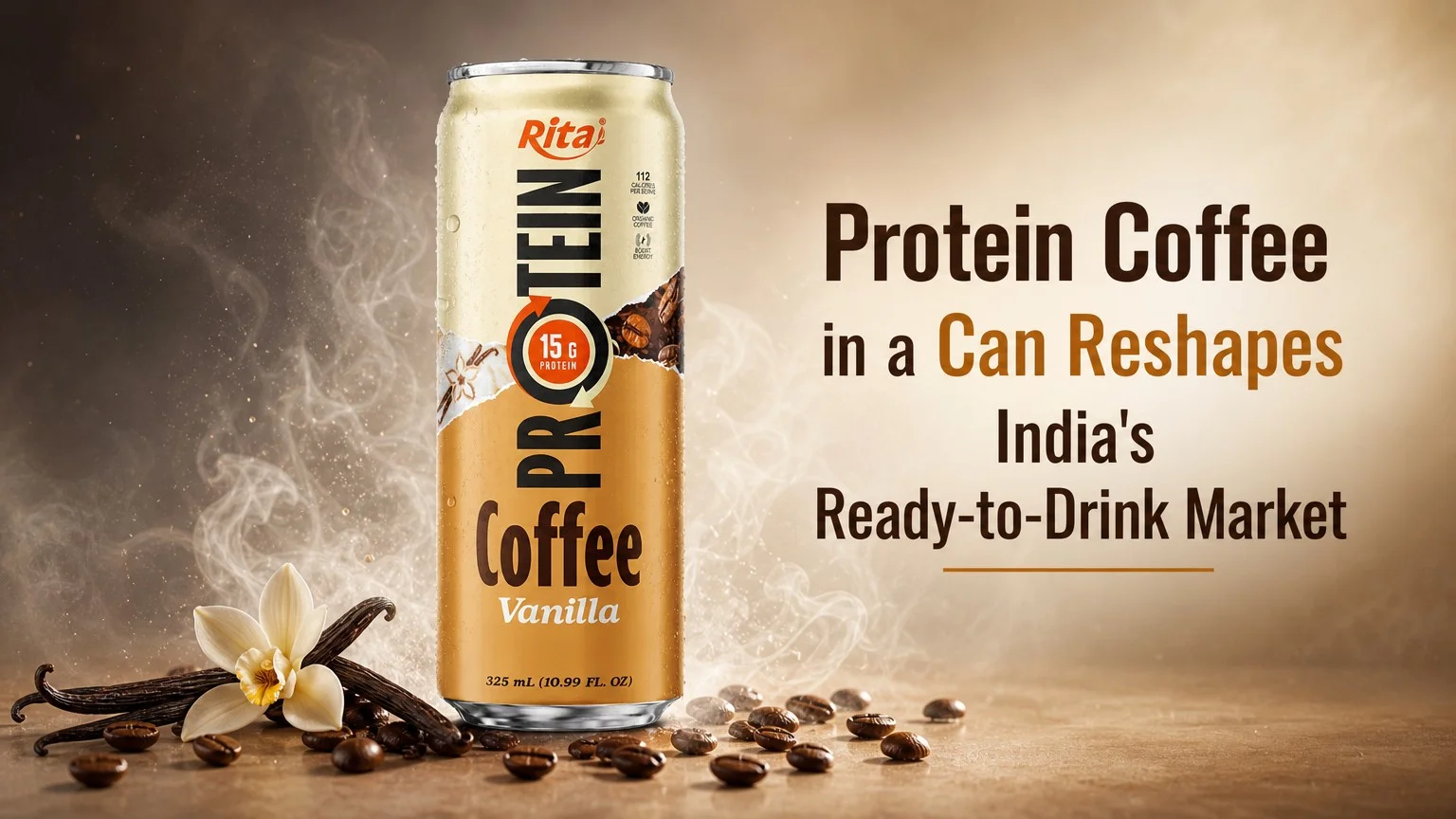

Ready to drink coffee has moved from a niche convenience play to a mainstream fixture in modern retail, and Rita Protein Coffee is a compact illustration of how the category is being re-engineered. The 325ml aluminum can pairs a creamy latte flavor with 15g of protein and 112 calories per serve, a specification sheet that speaks to shoppers who read labels as closely as they read price tags. For distributors, importers and private-label partners tracking the segment, the launch offers a clear view of how taste, format and packaging responsibility increasingly travel together inside a single stock-keeping unit.
Key Takeaways
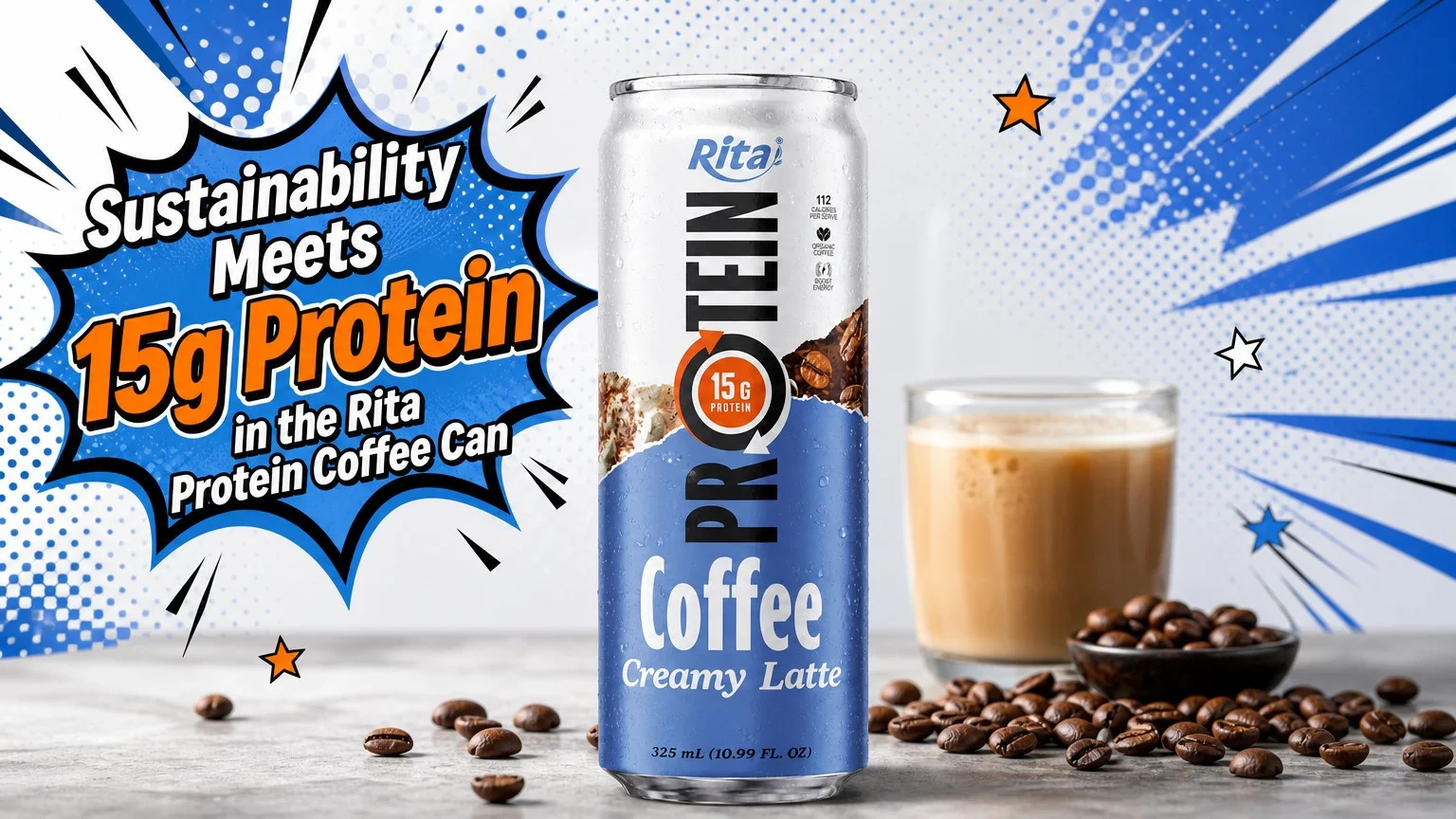
- Rita Protein Coffee delivers 15g of protein and 112 calories in a 325ml can with a creamy latte flavor.
- Aluminum can packaging stays central to sustainability conversations across the ready to drink coffee trade.
- RITA Food and Drink Co., Ltd runs more than 50 automated production lines and exports to over 200 countries and territories.
- Twenty-four month shelf life and flexible minimum order quantities simplify cross-border planning for importers.
- The manufacturer's certification portfolio includes BRC, FSSC 22000, Halal, Kosher, ISO, GMP, HACCP and SMETA audits.
Rita Protein Coffee Enters India's Ready to Drink Coffee Aisle
Convenience now defines the coffee shelf across India's modern trade, and the Rita Protein Coffee 15g can is a useful marker of how quickly buyer expectations have moved.
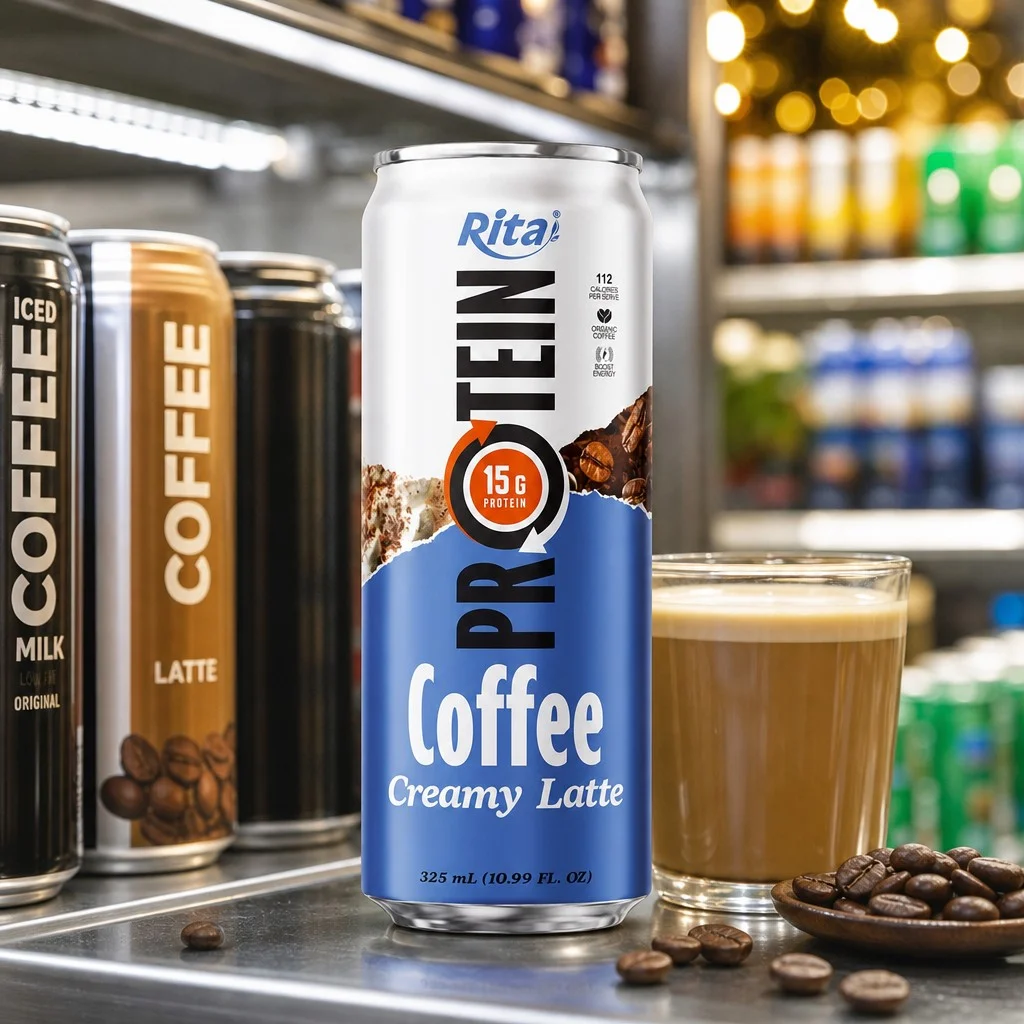
The 325ml can blends instant coffee powder, whole milk powder and milk protein concentrate into a smooth, creamy latte, with each serve declared as 15g of protein and 112 calories on a blue-and-white label illustrated with coffee beans and dessert motifs. For distributors covering Maharashtra, Delhi, Karnataka, Tamil Nadu, Gujarat, Uttar Pradesh, West Bengal, Rajasthan, Kerala, Andhra Pradesh and Telangana, the pitch is short and repeatable: a familiar flavor, a familiar format, and a clear number set printed on the front of pack.
Category observers describe the same pattern in metro catchments, where shoppers move between café visits, saché mixes and chilled cans within a single week. RTD coffee in India is absorbing that shift, and a single chilled SKU lets retailers participate in the moment without adding equipment or staff training.
Why the 325ml Can Format Works
Portability is the argument, and the can makes it cleanly.
A 325ml aluminum can travels well in a bag, fits standard cupholders and chills quickly in a retail cabinet or vending unit, three practical requirements for office pantries, campus stores, transport hubs and quick-service counters. The format also keeps portioning consistent: one can, one serve, no mixing, no water, no spoon. That removes friction from impulse occasions, where shoppers decide in seconds rather than minutes, and it gives operators a product that performs the same way whether it sits in a cooler, a canteen rack or a train kiosk.
Flavor Positioning and Shelf Story
The creamy latte taste sits deliberately between indulgent blended drinks and plain black cans.
That middle ground is where much of the repeat volume appears to sit: sweet enough to read as a treat, restrained enough to return to later in the day. The balance leans on the interplay of roasted coffee notes and a rounded milk texture, while the front-of-pack imagery, coffee beans beside a dessert-style latte, communicates the experience before a shopper reads a line of copy. For buyers, taste remains the fastest-moving variable on the shelf, and a creamy latte profile carries across age groups and occasions without a learning curve.
Sustainability by Design in Canned Coffee
Packaging has become a boardroom topic in beverages, not a footnote.
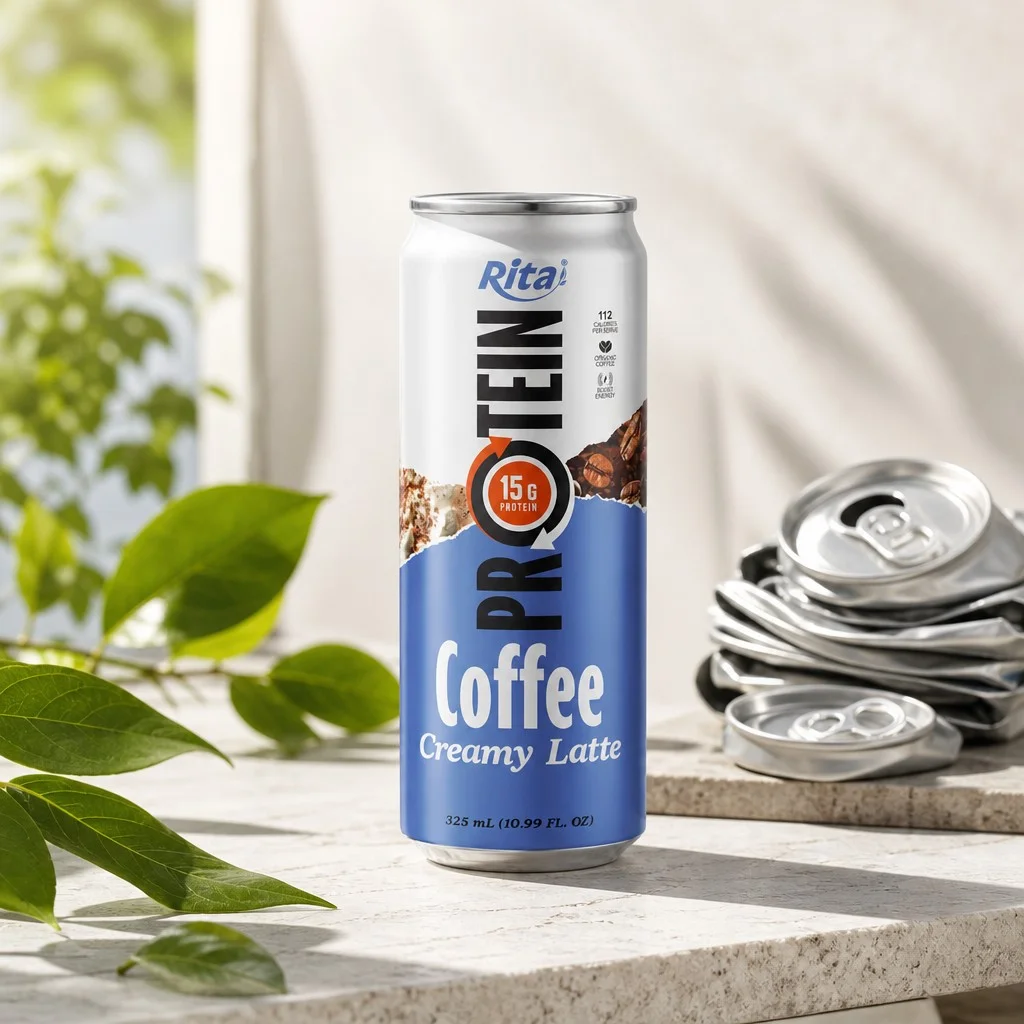
Aluminum can packaging is widely regarded in the trade as one of the most established formats for collection and remelting, and that material story gives marketers a credible sustainability narrative without reworking the drink itself. The 325ml can also protects the product across long distribution routes and a twenty-four month shelf life, which matters commercially: fewer short-dated write-offs, less handling waste, and cans that arrive in the condition they left. In an industry where avoidable shrinkage eats margin quietly, longevity is a sustainability argument as much as a logistics one.
Where Packaging Sits on Buyer Scorecards
Sustainability criteria now appear in retailer questionnaires alongside price and lead time.
Buyers increasingly ask for material declarations, recyclability statements, lightweighting notes and audit evidence before a listing conversation begins. For exporters, that means documentation behaves like part of the product: certificates, specification sheets and packaging disclosures travel together, and suppliers that present them in one organised pack shorten the path to approval. Sustainable beverage packaging is no longer a differentiator reserved for premium launches; it is a filter applied to the entire assortment.
The wider industry backdrop underscores the point. Coca-Cola replaced PepsiCo as KFC's drinks supplier in the United States, a reminder that supply relationships can be rewritten quickly; AB InBev's BeatBox brand faced packaging penalties in the United Kingdom, showing how compliance gaps carry direct cost; and Hain Celestial has reportedly considered a Chapter 11 filing, evidence that established food and beverage names still operate under tight pressure. Against that backdrop, disciplined packaging choices and clean audit trails read as risk management as much as brand positioning.
From the Coffee Highlands to the Can
Traceability stories sell better when they can be pointed at, and RITA's sourcing narrative starts in the fields, where the company's team documented a visit to Vietnam's coffee gardens at the peak of harvest season, following cherries from hillside plots through to the beans that eventually reach the can.
The field footage recorded during that sourcing trip is published at https://www.youtube.com/watch?v=F2yJLjUYiuo and gives buyers a fast sense of the growing conditions behind the raw material.
For marketers, this is content that converts: a short, verifiable origin sequence that can be repurposed in shelf talkers, distributor decks and social posts without inventing a claim. It also answers the question every importer eventually asks about a new coffee SKU, namely where the coffee actually comes from.
OEM Capacity and Export Infrastructure Behind the Can
Scale is what turns a good can into a repeatable supply contract.
RITA Food and Drink Co., Ltd, established in 2004, operates as an OEM beverage manufacturer and ODM partner with more than 50 automated production lines and over 1,200 containers shipped monthly, serving brands from a portfolio that spans tropical juices, coconut products, energy drinks and canned coffee. Buyers reviewing the Rita Protein Coffee product page will find the commercial terms stated plainly: flexible MOQ, twenty to twenty-five days after order confirmation, and loading at Ho Chi Minh Port. Partners who want the same creamy latte base under a different label can review the company's OEM manufacturing service before requesting samples.
| Attribute | Detail |
|---|---|
| Brand | RITA (OEM/ODM available) |
| Product | Protein coffee, creamy latte flavor |
| Pack format | 325ml aluminum can |
| Protein per can | 15g |
| Calories per serve | 112 |
| Shelf life | 24 months |
| Minimum order | Flexible MOQ |
| Lead time | 20-25 days after order confirmation |
| Loading port | Ho Chi Minh Port, Vietnam |
Product data supplied by RITA Food and Drink Co., Ltd.
Certification coverage is not uniform across every stock-keeping unit, so buyers should confirm which of BRC, FSSC 22000, Halal, Kosher, ISO, GMP and HACCP documents apply to the specific can they intend to list, rather than assuming the full portfolio transfers to each item.
Export planning for the protein coffee drink line draws on established routes to more than 200 countries and territories, where canned coffee demand continues to shift between quarters, channels and private-label programmes.
What Retail Buyers Should Weigh Before Listing Rita Protein Coffee
Shortlists are usually built on six or seven questions, and this SKU answers most of them quickly.
Before a listing conversation, buyers typically check format fit, flavor credibility, documentation, order economics and replenishment reliability. The 325ml can covers impulse and chilled occasions, the creamy latte profile travels without explanation, and the twenty-four month shelf life gives importers room to plan containers without immediate discounting pressure. What remains is alignment on volume, front-of-pack language, and the paperwork each state's trade regulations require for imported beverages.
- Confirm the front-of-pack declaration of 15g protein, 112 calories and 325ml against local labelling rules.
- Request only the certificates that genuinely apply to this item from RITA's portfolio, which includes BRC, FSSC 22000, Halal, Kosher, ISO, GMP and HACCP.
- Agree MOQ and lead time early; flexible MOQ and a twenty to twenty-five day window keep a first order manageable.
- Decide chilled versus ambient placement before the first container lands, since the format performs differently in each bay.
- Ask whether the same base recipe can be extended through the Coffee Drink catalog or adapted within the Milk Series range.
For partners comparing suppliers, the full Rita Protein Coffee listing brings the specification sheet, certification marks and enquiry form into one place, which is typically where evaluation conversations begin.
Frequently Asked Questions
What is Rita Protein Coffee?
It is a 325ml ready-to-drink can combining instant coffee powder, whole milk powder and milk protein concentrate into a creamy latte coffee, with 15g of protein and 112 calories declared per serve.
What are the order terms for importers?
Minimum order quantities are flexible, delivery runs 20 to 25 days after order confirmation, and goods load at Ho Chi Minh Port with a 24-month shelf life from production.
Which certifications apply to this product?
Only part of RITA's certification portfolio applies to individual items. Buyers should confirm the relevant documents, such as BRC, FSSC 22000, Halal, ISO, GMP or HACCP, for the specific can they plan to list.
Is private label production available?
Yes. RITA operates OEM and ODM programmes, so the same creamy latte formulation can be produced under a buyer's own brand with agreed artwork and pack specifications.