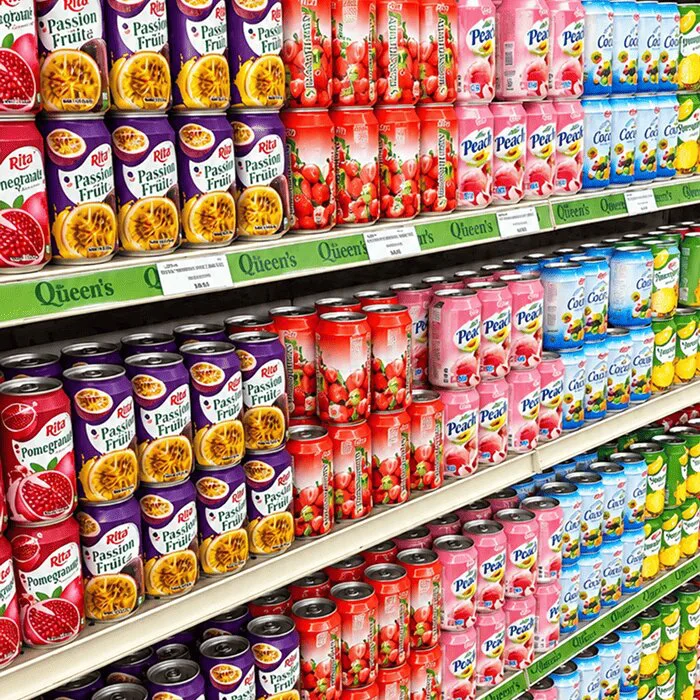

The global ready-to-drink beverage sector is navigating an increasingly complex regulatory landscape, and the ready-to-drink protein coffee segment sits squarely at the intersection of food safety compliance, labeling requirements, and cross-border trade standards. As regulators across major import markets tighten scrutiny on fortified beverages and canned coffee products, manufacturers must demonstrate rigorous certification credentials to access shelf space. This shifting compliance environment is reshaping how brands formulate, package, and export high-protein coffee drinks to demanding consumers in urban centers across India, from Maharashtra and Delhi to Karnataka, Tamil Nadu, Gujarat, Uttar Pradesh, West Bengal, Rajasthan, Kerala, Andhra Pradesh, and Telangana.
Key Takeaways
- Regulatory bodies worldwide are tightening labeling and food safety rules for ready-to-drink protein beverages.
- Multi-certification portfolios — including FSSC 22000, HACCP, BRC, ISO 22000, GMP, and Halal — are becoming baseline requirements for exporters.
- Mocha-flavored protein coffee in 325ml cans is gaining traction among urban professionals and fitness-oriented consumers.
- India's expanding retail and modern trade channels are amplifying demand for compliant, shelf-stable canned beverages.
- OEM and ODM partners with global export footprints offer brands a faster route to regulatory-ready product launches.
Regulatory Tightening Sweeps the RTD Beverage Sector
Compliance is no longer a back-office function — it is a market entry gatekeeper. Importers in high-consumption states such as Maharashtra and Delhi now routinely request full documentation packages before approving new beverage SKUs, reflecting a broader global trend toward stricter enforcement of food safety management systems.
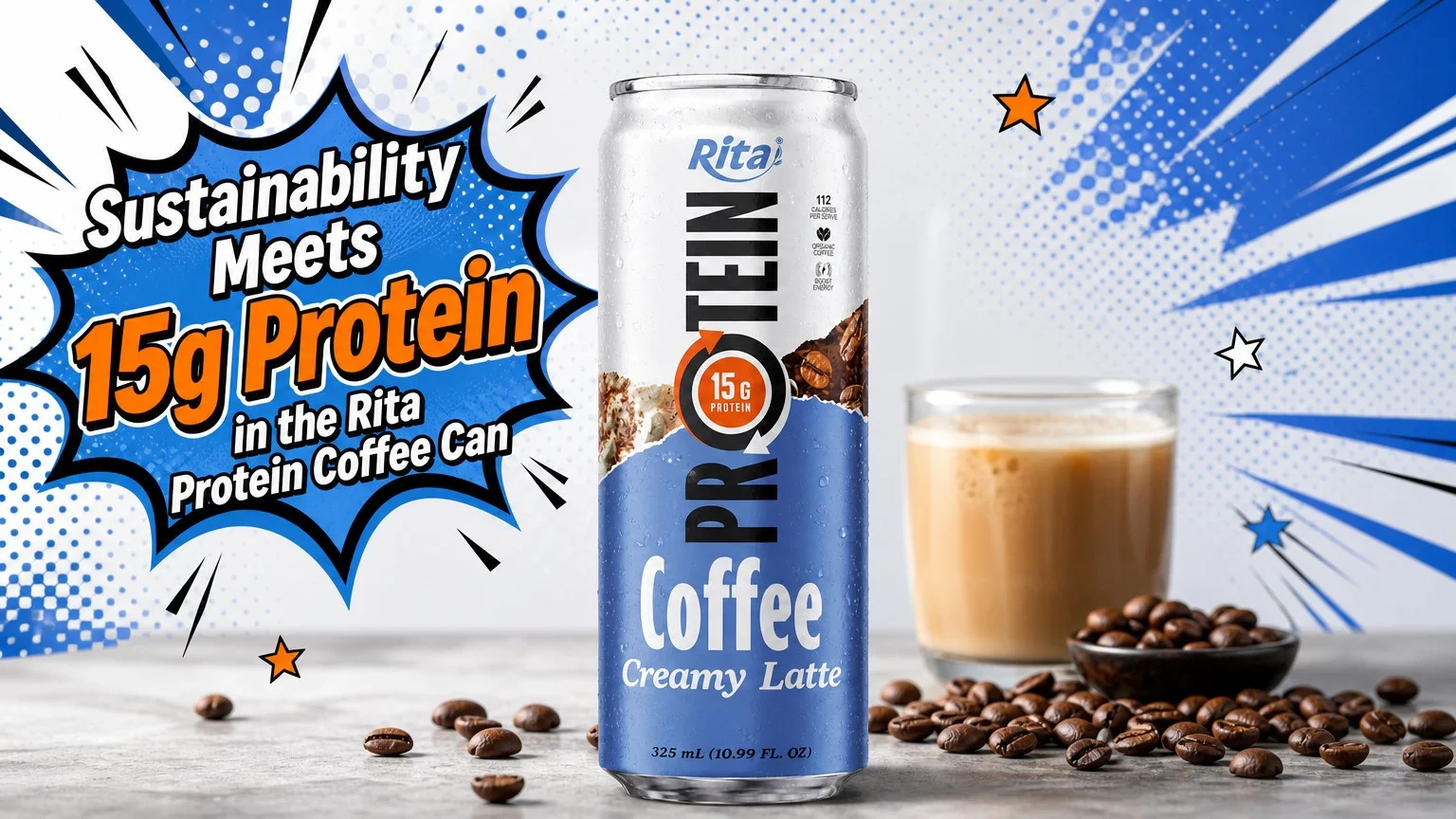
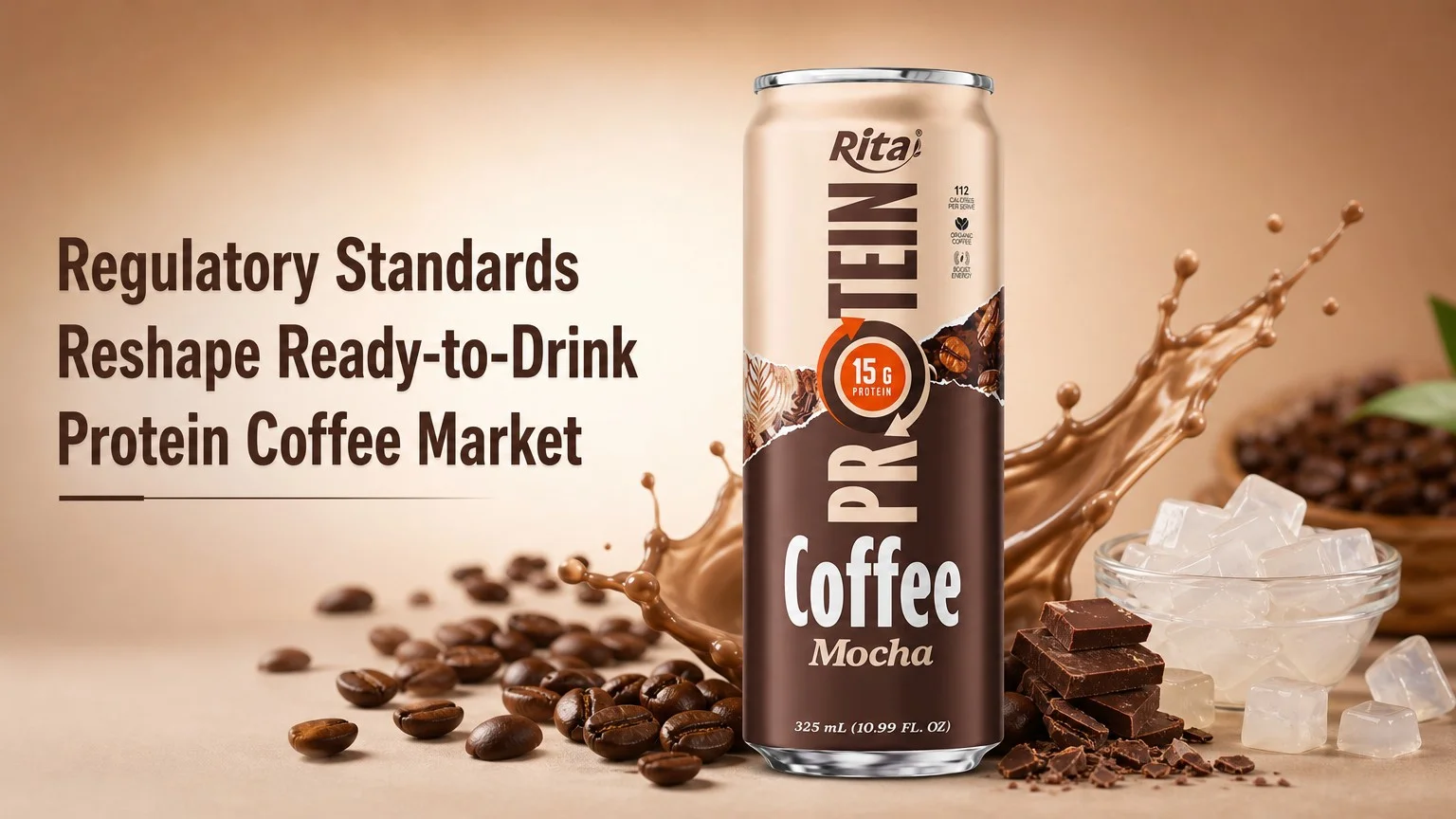
For canned protein coffee products, the compliance burden spans multiple layers: ingredient traceability, shelf-life validation, additive declarations, and packaging migration testing. Regulators are paying closer attention to protein claims on labels, requiring manufacturers to substantiate declared protein content per serving. A single 325ml can carrying 15g of protein must withstand analytical verification, pushing producers toward validated laboratory protocols and batch-level record keeping.
Certifications such as FSSC 22000, HACCP, ISO 22000, GMP, and BRC Food have evolved from differentiators into prerequisites. Halal certification, held through recognized bodies like Jakim and HCA-GCC, further expands market access for exporters targeting Muslim-majority import corridors. Without this layered certification stack, even well-formulated products risk rejection at customs or exclusion from modern retail tenders.
Labeling Rules and Protein Claim Substantiation
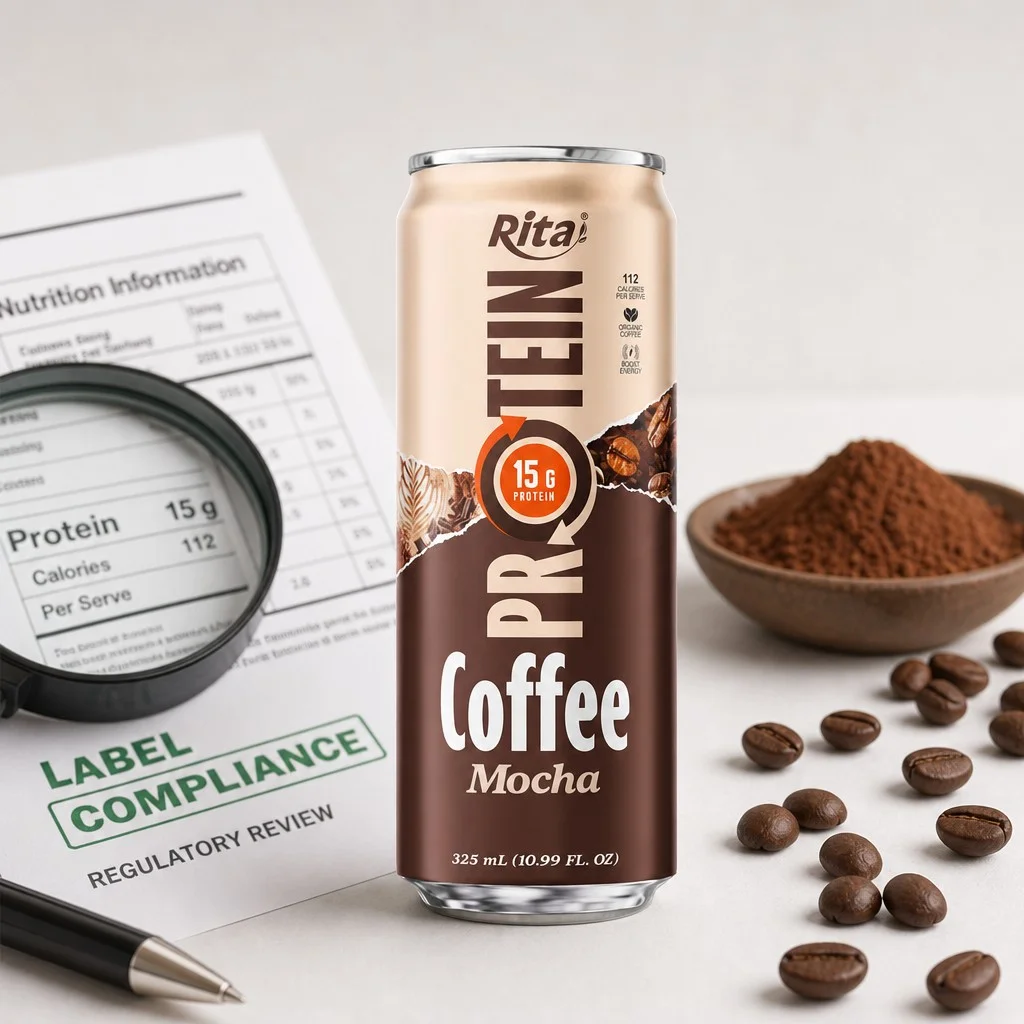
Labeling represents the most visible front in the regulatory battle. Authorities are aligning nutrition declaration formats, serving-size definitions, and allergen disclosures with international codex-aligned frameworks. For a protein coffee mocha product, the interplay between coffee solids, milk-derived protein, cocoa components, and sweeteners creates a complex declaration matrix that must be rendered accurately on a compact 325ml can.
Manufacturers exporting under private-label agreements face an additional layer of responsibility, since the brand owner and the OEM share accountability for label accuracy. This dynamic has accelerated demand for turnkey regulatory support from beverage partners who can deliver artwork review, claim substantiation dossiers, and market-specific label variants as part of the production package.
India's Urban Demand Meets Compliance-Ready Supply Chains
India's ready-to-drink coffee category is expanding on the back of rising convenience culture and a young, urban consumer base. Cities across Karnataka, Tamil Nadu, and Telangana are witnessing growing shelf presence for canned coffee beverages, while Gujarat and Rajasthan represent emerging frontiers as modern trade penetration deepens.
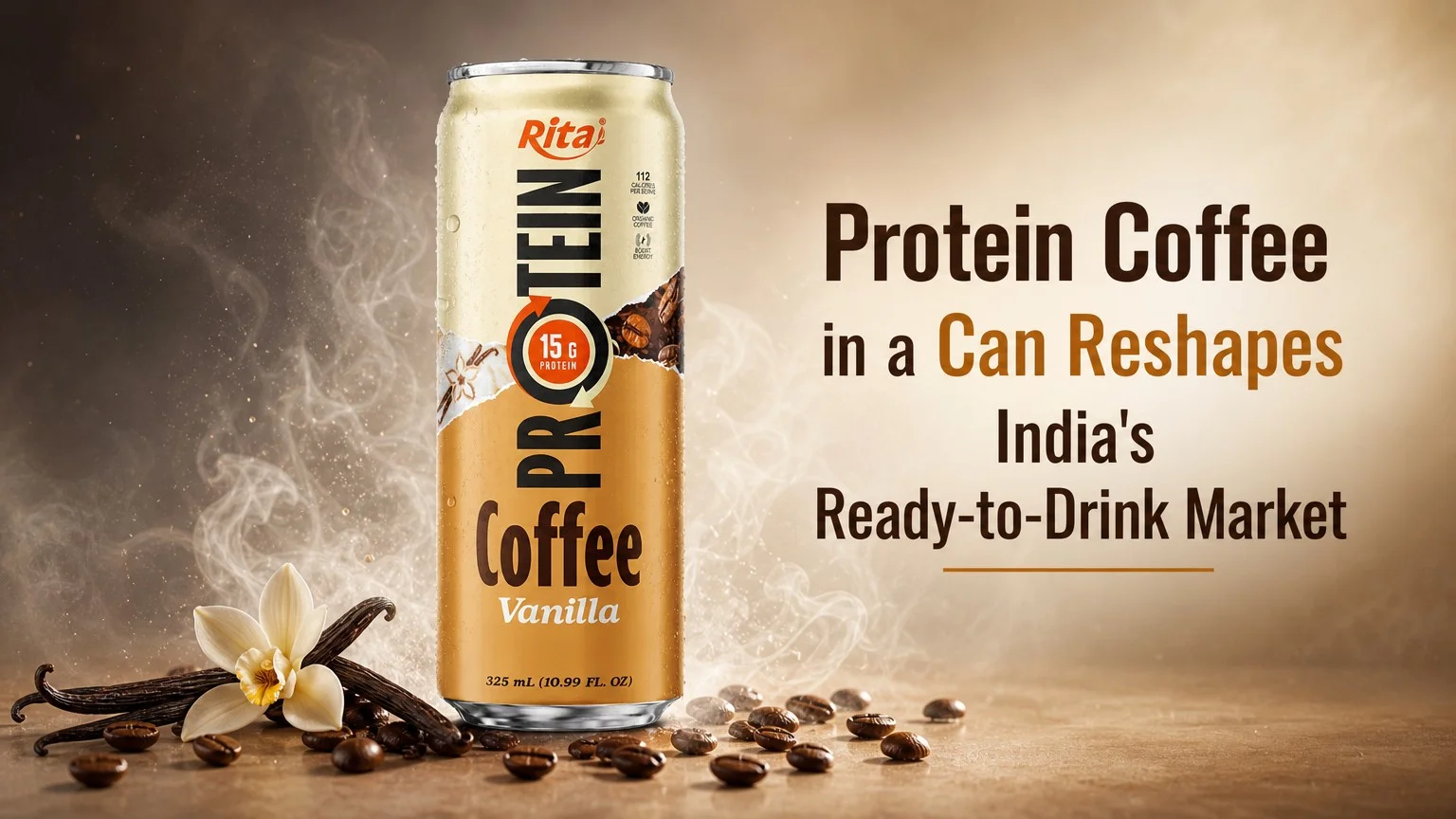
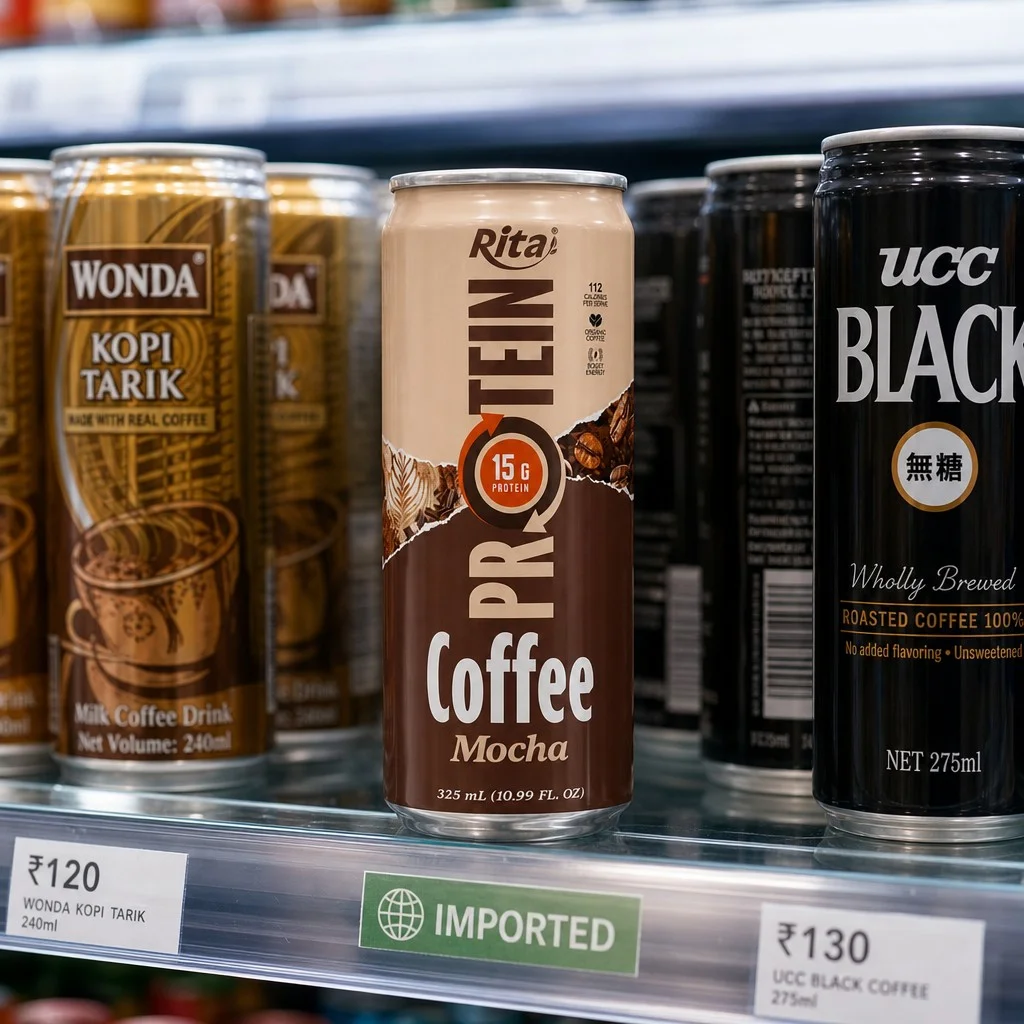
The mocha flavor profile — a familiar blend of coffee and chocolate notes — resonates strongly with young professionals and gym-goers seeking a convenient format that fits into commutes and workdays. With 112 calories per serving and a balanced sweetness level, a product like Rita Protein Coffee 15g in a 325ml can aligns with the taste expectations of consumers who want both familiarity and a protein-forward formulation in a single grab-and-go package.
Regulatory Divergence Across Indian States
While India operates a centralized food safety framework under FSSAI, enforcement intensity and inspection frequency vary considerably between states. Retailers in West Bengal and Uttar Pradesh may apply different shelf-acceptance criteria compared with premium outlets in Maharashtra or Kerala, adding complexity for national distributors managing multi-state rollouts.
Importers and distributors are therefore prioritizing suppliers whose products already carry internationally recognized certifications. A beverage that arrives with FSSC 22000, HACCP, ISO 22000, and Halal documentation pre-verified significantly shortens the onboarding timeline with state-level trade partners.
Andhra Pradesh and Delhi, with their dense modern trade networks, offer particularly attractive launch platforms for compliant canned coffee SKUs. Distributors in these markets increasingly view certification packages as a proxy for supplier reliability, using them to pre-screen candidates before committing to volume contracts.
Global Certification Frameworks and Export Readiness
The export-oriented beverage industry operates within a web of overlapping standards. BRC Global Standards, FSSC 22000, ISO 22000, GMP, HACCP, and SMETA audits each address different facets of operational integrity — from food safety management to ethical trade practices. For a manufacturer supplying brands in more than 180 countries, maintaining simultaneous compliance across these frameworks is a substantial operational undertaking.
RITA Food and Drink Co., Ltd, established in 2004, exemplifies this multi-certification approach. The company operates over 50 automated production lines and exports more than 1,200 containers monthly to buyers across 200+ countries and territories, offering both OEM and ODM solutions for brands seeking regulatory-ready beverage production. Its portfolio spans tropical fruit juices, coconut products, functional drinks, energy drinks, and canned coffee beverages — all manufactured under internationally recognized quality systems. Prospective partners can explore the company's corporate profile and manufacturing background to understand the scope of its export operations.
Halal and Kosher Credentials as Trade Enablers
Halal and Kosher certifications function as commercial enablers rather than mere compliance checkboxes. For exporters serving Middle Eastern, Southeast Asian, and diaspora markets, Halal Jakim and Halal HCA-GCC credentials open doors that uncertified products simply cannot pass. Similarly, Kosher certification broadens appeal in North American and European retail channels where dual-certification products are preferred by category buyers.
The practical implication for Indian importers is straightforward: a canned protein coffee carrying this breadth of certification arrives with fewer regulatory hurdles at re-export or re-distribution stages, reducing carrying costs and time-to-shelf.
From Highlands to Can — Sourcing and Raw Material Integrity
Regulatory compliance begins long before a can is filled. Raw material sourcing standards, supplier approval programs, and incoming ingredient testing form the first line of defense in a food safety management system. For coffee-based beverages, the provenance and handling of coffee extracts, cocoa components, and protein isolates directly influence both flavor consistency and label accuracy.
Traceability requirements under FSSC 22000 and ISO 22000 demand that manufacturers document the journey of key ingredients from origin to finished product. This level of transparency is increasingly requested by brand owners conducting their own supplier audits, particularly those operating in highly regulated import markets.
RITA maintains dedicated sourcing relationships for its beverage inputs, including visits to raw material areas that inform quality specifications. The company's coffee garden sourcing program in Vietnam's central highlands illustrates how upstream engagement supports downstream consistency for coffee-based product lines.
https://www.youtube.com/watch?v=F2yJLjUYiuo
Product Positioning Within a Crowded RTD Aisle
Differentiation in the ready-to-drink protein coffee category hinges on three variables: protein content per serving, flavor execution, and packaging format. The 325ml sleek can has emerged as a preferred format for urban distribution — compact enough for convenience-store coolers, durable enough for export shipping, and visually conducive to premium shelf presentation.
The Rita Protein Coffee 15g Mocha targets this intersection directly. Each can delivers 15g of protein alongside a mocha flavor built from coffee and chocolate notes, presented in a light brown and dark brown design accented with coffee bean and leaf motifs. The 112-calorie serving profile and 24-month shelf life make it suitable for extended distribution networks where cold-chain infrastructure remains inconsistent.
For brand owners evaluating private-label entry into India's canned coffee segment, the combination of flexible MOQ, free sample availability, and a 20–25 day delivery window from Ho Chi Minh Port represents a commercially practical pathway. Payment terms including L/C and T/T further accommodate the working-capital preferences of mid-size importers operating across states like Uttar Pradesh and Rajasthan.
Buyers reviewing the broader ready-to-drink coffee beverage catalog will find complementary formats and flavor variants that can be bundled for multi-SKU distribution agreements, strengthening negotiating position with national retail chains.
Competitive Benchmarking Against Alternative Formats
When benchmarking canned protein coffee against bottled or carton-based alternatives, several trade-offs emerge. Aluminum cans offer superior light and oxygen barrier properties, supporting the 24-month shelf life that long-haul exporters require. PET and glass alternatives, while visually appealing, introduce different migration-test considerations under evolving packaging regulations.
| Attribute | 325ml Aluminum Can | PET Bottle | Glass Bottle |
|---|---|---|---|
| Light barrier | Excellent | Low | Moderate |
| Shelf life potential | Up to 24 months | 6–12 months | 12–18 months |
| Export weight efficiency | High | High | Low |
| Recyclability perception | Strong | Moderate | Strong |
Source: Industry packaging comparison, compiled for editorial reference.
Strategic Outlook for Regulatory-Ready Beverage Exporters
The convergence of stricter import documentation, evolving protein-claim substantiation rules, and growing retail scrutiny means that certification depth will increasingly determine which suppliers win shelf space. For Indian buyers across Maharashtra, Delhi, Karnataka, Tamil Nadu, Gujarat, Uttar Pradesh, West Bengal, Rajasthan, Kerala, Andhra Pradesh, and Telangana, the practical filter is simple — does the supplier arrive with a complete, verifiable compliance package?
Products such as Rita Protein Coffee 15g Ready-to-Drink High Protein Coffee Mocha illustrate how manufacturers can align flavor appeal, packaging practicality, and multi-standard certification into a single export-ready SKU. The mocha variant sits within a wider portfolio that also includes non-alcoholic beverage categories, giving distributors cross-category bundling options through the non-alcoholic beverage range.
Looking ahead, expect regulators to place greater emphasis on digital traceability, front-of-pack nutrition labeling harmonization, and substantiation of on-label claims. Suppliers who invest proactively in these areas — rather than reacting to enforcement actions — will be best positioned to serve the next wave of India's convenience-beverage demand.
For procurement teams, the diligence checklist should include: verified certification scope per SKU, label artwork review against destination-market rules, shelf-life validation reports, and a clear audit trail for protein content claims. Suppliers who can present these documents upfront compress the approval cycle and de-risk the launch of new canned coffee offerings across India's diverse state markets.
Frequently Asked Questions
What certifications apply to Rita Protein Coffee 15g Mocha 325ml Can?
The product carries selected certifications from RITA's portfolio, including Halal, BRC Food, FSSC 22000, GMP, HACCP, and ISO 22000. Only some of the company-wide certifications apply to this specific SKU, and buyers should confirm the applicable scope during order confirmation.
What is the shelf life and delivery timeline for this protein coffee can?
The product has a 24-month shelf life. Delivery time is 20 to 25 days after order confirmation, shipped from Ho Chi Minh Port, Vietnam, with flexible MOQ and payment terms including L/C and T/T.
Is OEM or private label production available for this ready-to-drink protein coffee?
Yes. RITA Food and Drink Co., Ltd offers OEM and ODM solutions for its beverage portfolio, including canned coffee drinks. Brands can request free samples and customized formulation or packaging options for their target markets.
Which Indian states are key markets for canned protein coffee distribution?
Major demand centers include Maharashtra, Delhi, Karnataka, Tamil Nadu, Gujarat, Uttar Pradesh, West Bengal, Rajasthan, Kerala, Andhra Pradesh, and Telangana, where urban retail and modern trade channels are expanding rapidly.