
The global beverage sector is entering what trade observers describe as its most consequential decade yet. Sustainability, once a peripheral line in a corporate brochure, has moved to the centre of product development, packaging decisions and export strategy for manufacturers competing in the functional drinks segment. One product illustrates the shift with unusual clarity: yuzu lemon electrolyte water, a low-sugar hydration beverage in a 325ml aluminum can now being positioned for international distribution by Vietnam-based RITA Food and Drink Co., Ltd. For distributors and retail chains across India, the emergence of such products signals a broader change in how drinks are sourced, formulated, packed and shipped across continents.
Key Takeaways
- Sustainability has shifted from a marketing add-on to a commercial requirement in beverage category planning and shelf placement.
- Low-sugar electrolyte water formats are gaining traction in India's retail, foodservice and travel-retail channels.
- Aluminum can packaging offers lightweight, recyclable format advantages that align with export logistics.
- RITA operates a 30,000 m2 manufacturing base with more than 50 automated production lines and exports to 200+ countries and territories.
- Flexible MOQ, OEM and private label options lower the barrier for Indian importers testing new categories.
Sustainability Reshapes the Global Beverage Landscape
Sustainability in beverages is no longer a niche preference; it has become a procurement filter.
Brand owners and trade buyers now evaluate suppliers on packaging weight, recyclability, water stewardship in raw material sourcing, and the transparency of production documentation. The result is a structural change: manufacturers that can evidence these dimensions win listings in modern trade channels, while those that cannot struggle to justify shelf space against better-documented competitors. In a category as crowded as packaged drinks, traceability has quietly become a form of differentiation in its own right.
For India's beverage market, the timing is notable. States including Maharashtra, Delhi, Karnataka, Tamil Nadu, Gujarat, Uttar Pradesh, West Bengal, Rajasthan, Kerala, Andhra Pradesh and Telangana together represent one of the fastest-evolving consumer trade landscapes in Asia. Urban retail penetration, the expansion of modern trade formats and a growing appetite for internationally formulated products have created an environment where new categories can gain national traction faster than in previous cycles.
Packaging Choices Now Carry Commercial Weight
Packaging is where sustainability discussions become tangible. Aluminum can formats are lightweight relative to glass, stack efficiently in pallets and are widely processed through metal recycling streams in many markets. PET and PP bottle formats bring different cost and logistics profiles, while glass retains premium positioning cues but adds weight to freight. The decision is rarely about one attribute alone; it balances landed cost, brand positioning, cold-chain requirements and the sustainability expectations of the retail partner.
Trade buyers have started to ask the same question about every new SKU: what does this format say about the brand when it reaches the shelf? A product that can answer that question credibly — in both design and supply documentation — tends to move through distributor conversations more efficiently.
Inside the Yuzu Lemon Electrolyte Water Category
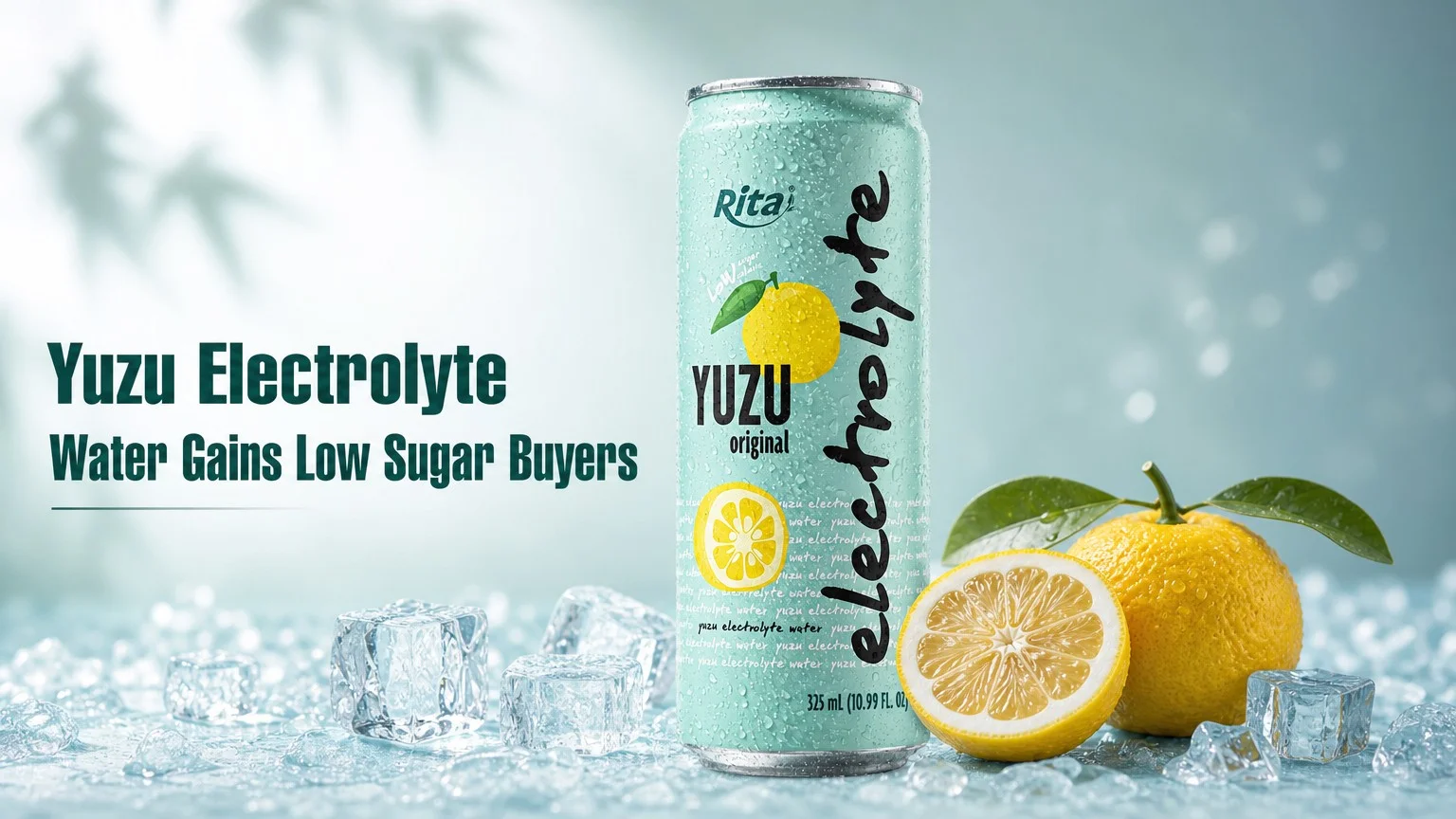
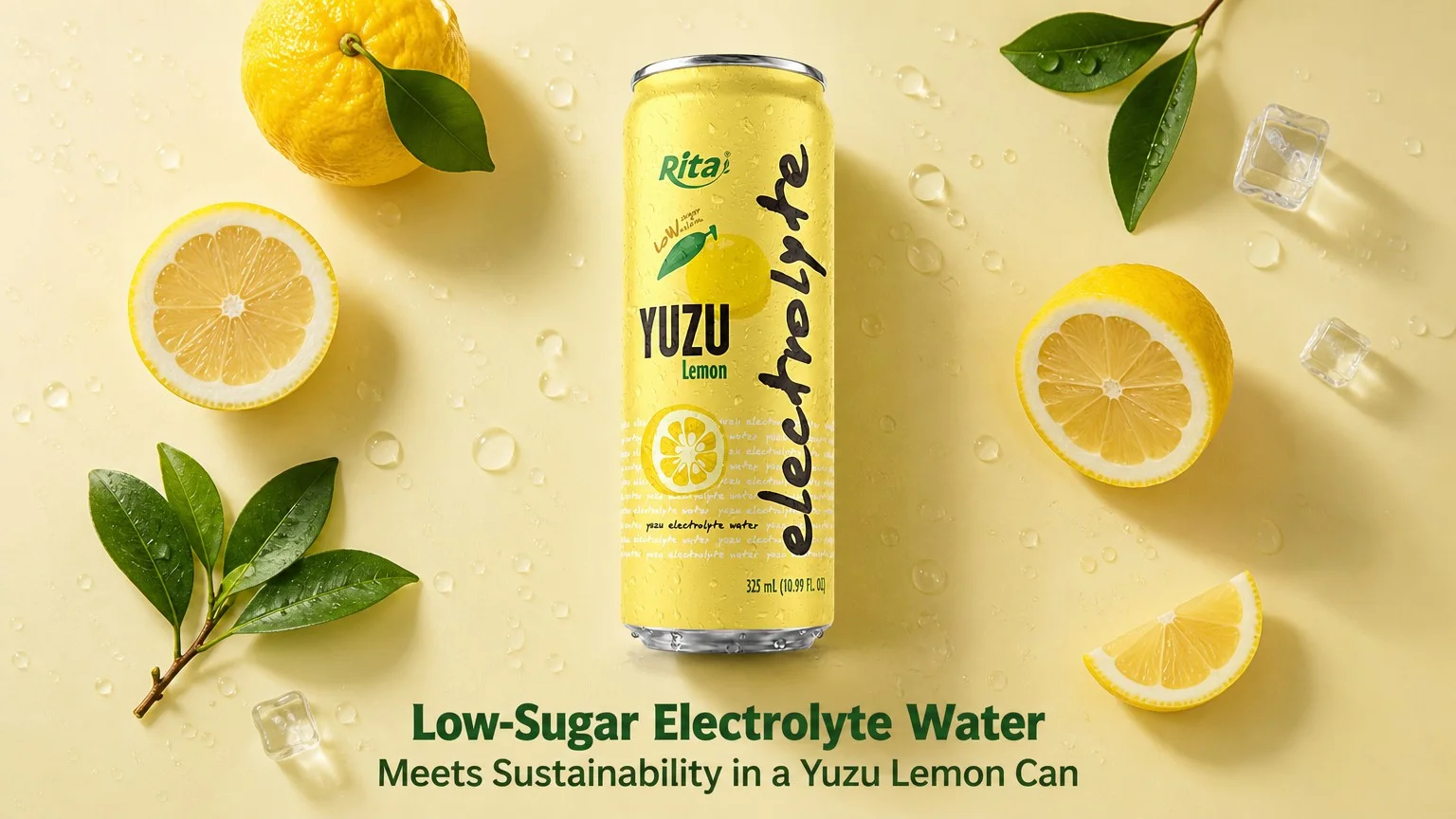
At the centre of this conversation is the yuzu lemon electrolyte water drink, a 325ml (10.99 fl oz) aluminum can beverage developed by RITA and offered for export under RITA branding or private label arrangements.
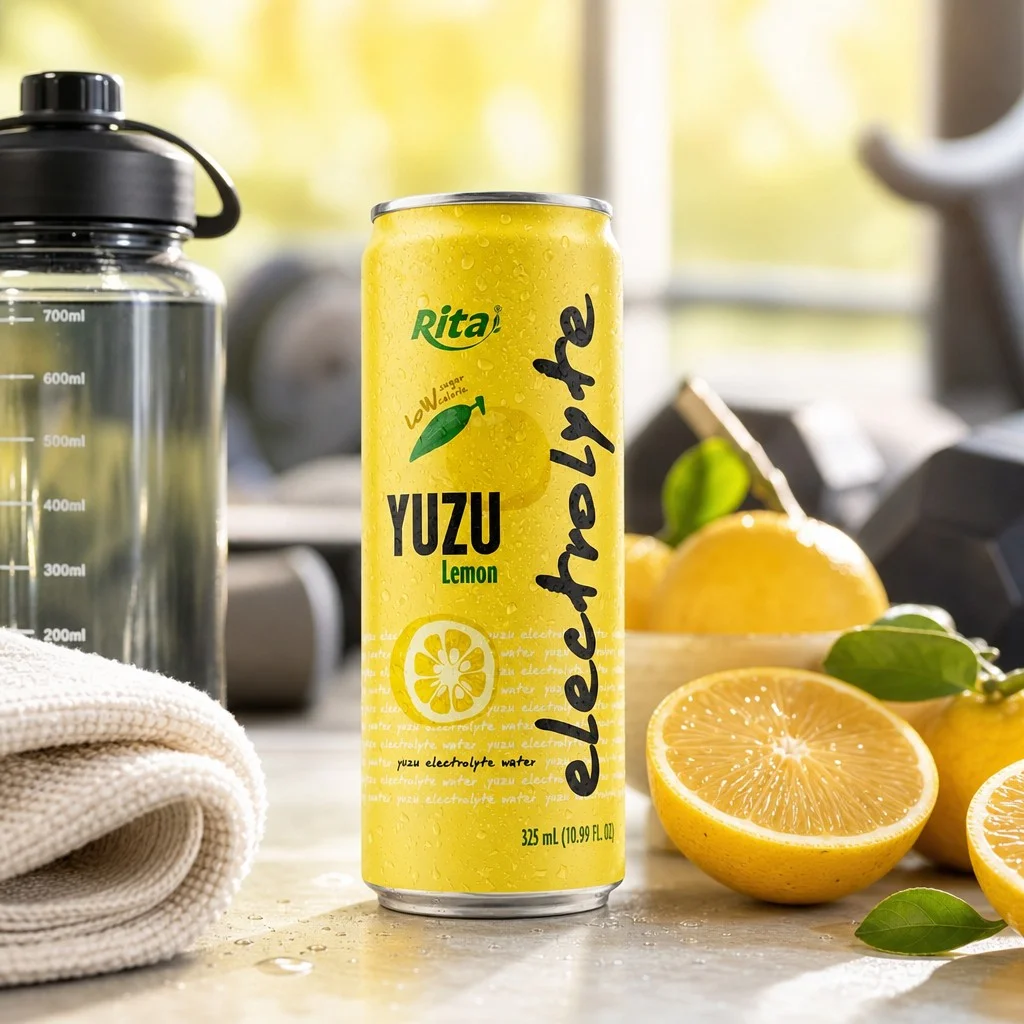
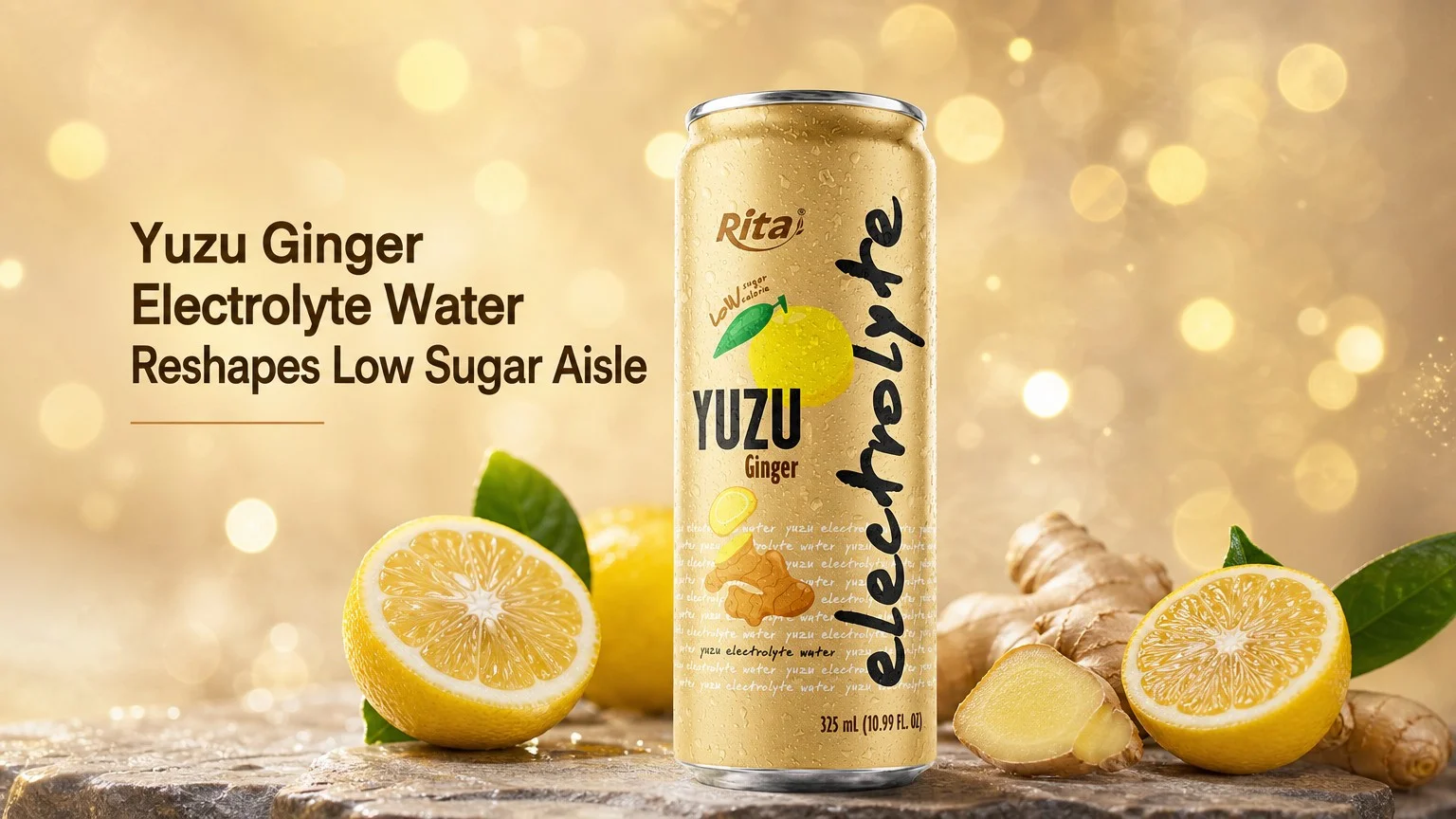
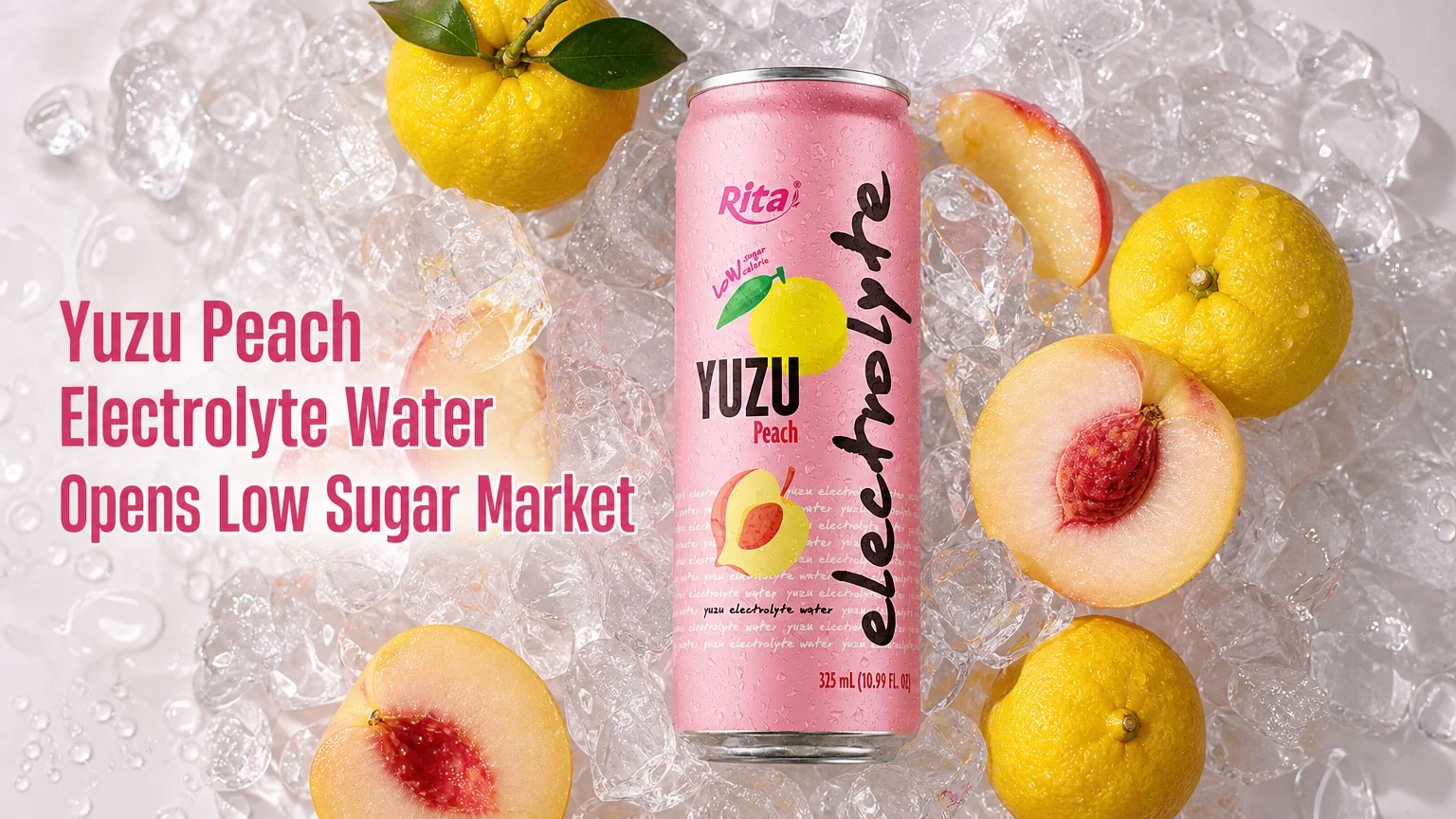
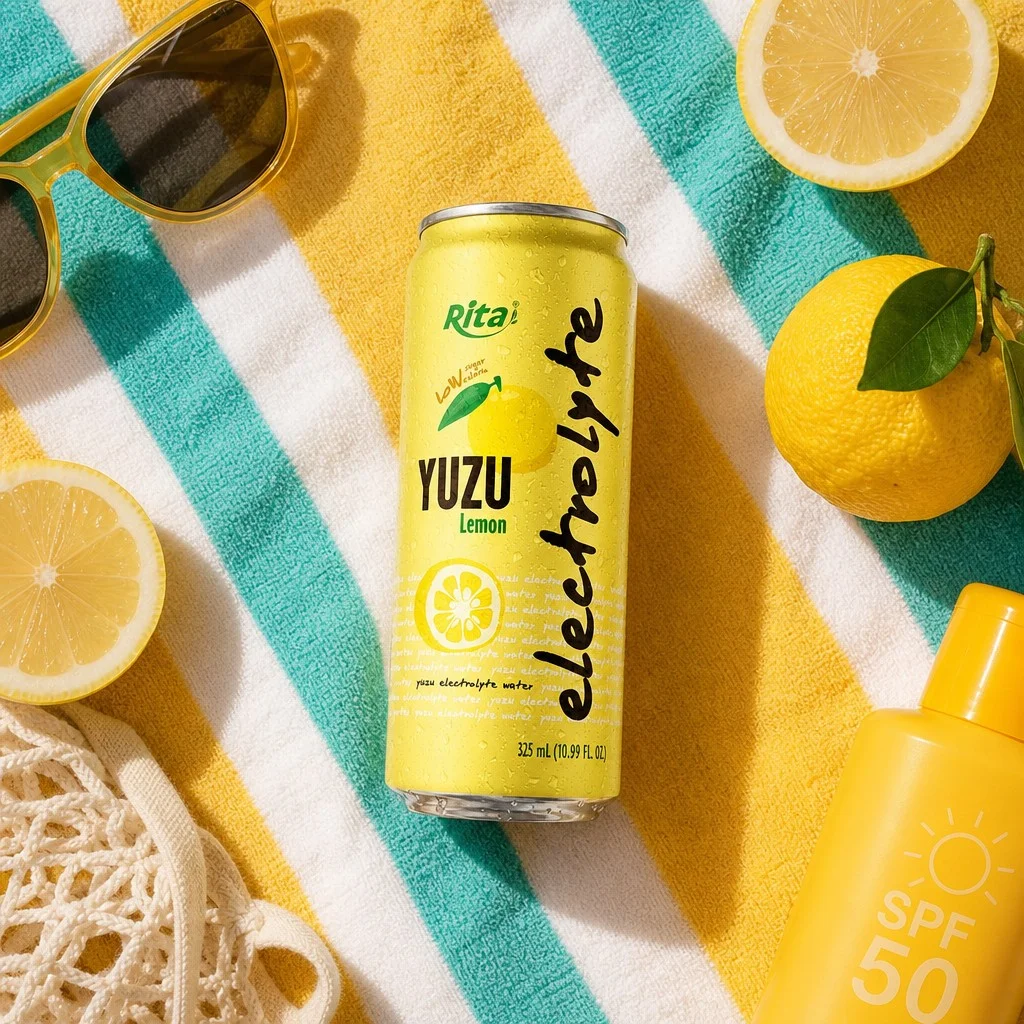
The can carries a bright yellow design language with black and green typography, a large cursive script reading "electrolyte," sliced yuzu and lemon graphics, and water-droplet imagery across the surface. The visual system communicates citrus freshness and lightness at shelf, which is exactly the register that modern retail buyers look for when scanning the chilled beverage section. The liquid inside is clear, reinforcing the product's positioning as a light, low-sugar refreshment rather than a syrupy fruit drink.
Flavor, Format and the Low-Sugar Proposition
Yuzu, the citrus variety native to East Asia, carries a distinctive aromatic profile — bright, floral and slightly bitter — that pairs naturally with lemon's sharper acidity. In a beverage context, that combination produces a clean, layered citrus character rather than a single-note sweetness. Combined with a low-sugar formulation and an electrolyte-forward identity, the product occupies a space that sits between ordinary soft drinks and heavily flavoured functional beverages.
The 325ml aluminum can format is deliberate. It suits single-serve consumption occasions — travel retail, sports venues, convenience channels and restaurant pairing — and it travels well in export documentation and cold-chain-free storage. With a 24-month shelf life, the format also reduces inventory risk for distributors managing multiple stock-keeping units across regional warehouses.
For Indian importers evaluating the category, the low-sugar yuzu lemon electrolyte water offers a concrete benchmark against which competing offers can be measured on formulation, can design and packaging specification. Free samples are available for qualified trade enquiries, which shortens the evaluation cycle considerably.
From Our Orchards — Raw Material Sourcing and Farm Connections
Behind every finished beverage sits a supply chain that buyers rarely see but always assess.
RITA's raw material sourcing draws on Vietnam's agricultural base, including the Mekong Delta fruit farm region, a zone long recognised for the quality and scale of its citrus and tropical fruit production. Citrus-derived ingredients — including lemon and its flavour analogues — are sourced through established agricultural networks that connect farm-level production with industrial beverage manufacturing.
For distributors in India evaluating a Vietnamese beverage partner, this sourcing geography matters in practical terms. Proximity to concentrated fruit-growing regions shortens transport legs between harvest and processing, and gives manufacturers a clearer line of sight into raw material quality across the production cycle.
A closer look at the sourcing territory behind these ingredients can be seen in the following footage: https://www.youtube.com/watch?v=jiBixXjeG8A
RITA's Manufacturing Scale and Export Credentials
RITA Food and Drink Co., Ltd was established in 2004 and has since grown into one of Vietnam's most experienced beverage manufacturers and exporters.
The company operates a 30,000 m2 factory footprint with more than 50 automated production lines and a workforce exceeding 500 employees. Monthly output capacity reaches roughly 1,200 containers, and the business supplies brands and distributors in more than 200 countries and territories. For Indian buyers, that scale translates into predictable lead times, consistent can decoration quality and the ability to support both private label programmes and regional launch volumes.
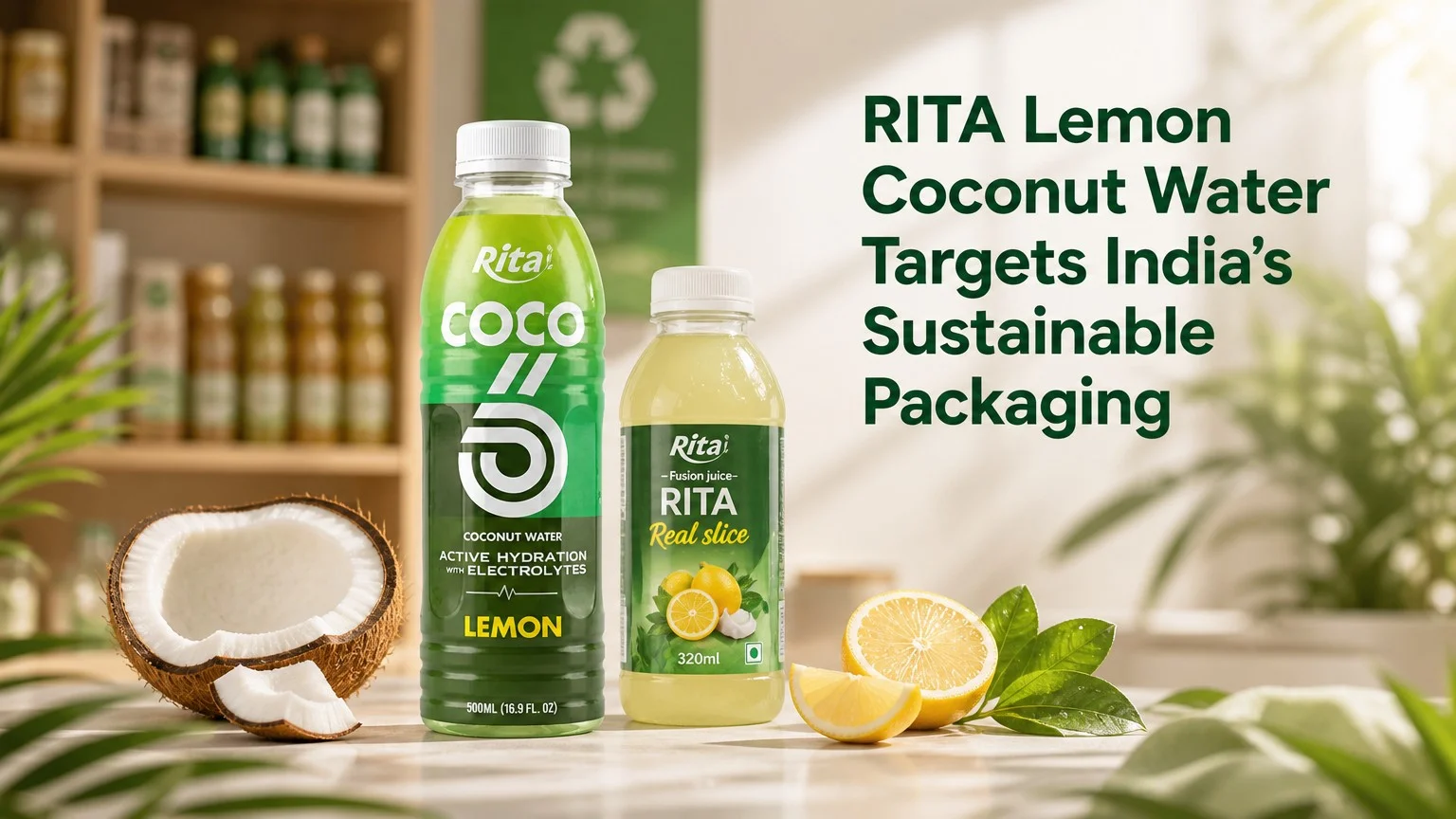
Product availability extends beyond this single SKU. The manufacturer's broader catalogue includes tropical fruit beverages, coconut-based drinks, functional beverages, energy drinks and tea-infused products, with packaging options across aluminum cans, glass bottles, PET and PP formats. Buyers exploring adjacent categories can review the wider fruit juice product range or the non-alcohol beverage catalogue for complementary listings.
Certifications That Open Trade Doors
Documentation is where many import conversations stall. RITA's facility holds a portfolio of internationally recognised certifications relevant to the categories it produces, including BRC, FSSC 22000, Halal Jakim, Halal HCA-GCC, Kosher, ISO 22000, GMP, HACCP and SMETA. Trade teams should confirm which specific approvals apply to a given SKU during technical evaluation — the company notes that certification scope varies by product line.
Commercial terms are designed for importer flexibility. Orders ship from Ho Chi Minh Port on a 20–25 day delivery schedule after confirmation, with payment available via L/C and T/T, and minimum order quantities set at 200 cartons for standard lines. Supply ability is quoted at around 500 twenty-foot containers per month, giving room for both trial programmes and larger regional rollouts. The full specification sheet for the 325ml Yuzu Lemon Electrolyte Water Drink is published on the manufacturer's product page, with catalogue downloads available for trade teams.
Opportunities Across India's Beverage Landscape
India's beverage market rewards brands that arrive with a clear point of difference and a credible supply story.
The opportunity for low-sugar electrolyte water formats is shaped by several converging trade factors: the expansion of modern retail across Tier 1 and Tier 2 cities, the growth of airport and travel-retail formats, the presence of premium chilled sections in supermarket chains, and the increasing presence of international flavour profiles on Indian shelves. Yuzu, while not yet a household term in every market, carries enough novelty to attract trial purchase while remaining broadly legible as a citrus-flavoured product.
For distributors in Maharashtra, Karnataka, Tamil Nadu, Gujarat, Uttar Pradesh, West Bengal, Rajasthan, Kerala, Andhra Pradesh and Telangana, the practical question is shelf placement and channel fit rather than consumer education alone. A well-designed 325ml can with a clean citrus identity can slot into chilled cabinets, airport kiosks, gym counters, co-working cafés and modern trade end-caps without demanding a dedicated category fixture.
Where Low-Sugar Electrolyte Water Fits the Retail Shelf
Channel strategy matters as much as formulation. Premium convenience outlets and urban supermarkets tend to be the first testing ground for internationally imported formats, followed by quick-service restaurant partnerships and travel-retail listings. Private label production is another route: the manufacturer offers OEM and ODM services that let Indian distributors build their own brand identity on an established production platform, with free design support available for packaging development.
Trade buyers should also consider the commercial mechanics of import. Landing costs depend on can specification, MOQ tier, seasonal volume commitments and the chosen Incoterm, and the manufacturer's flexible MOQ policy allows phased testing before full-scale listing. For exclusive agency arrangements, the company indicates that competitive pricing is available on larger volumes — a standard incentive structure in regional distribution agreements.
Why Aluminum Can Packaging Supports Sustainability Goals
Packaging format is the most visible sustainability decision a beverage brand makes.
Aluminum cans are lightweight to transport, which reduces freight emissions per unit shipped, and they are among the most widely recycled packaging substrates in global waste management systems. For a 325ml format intended for single-serve consumption, the economics stack up: efficient palletisation, reduced breakage in transit, and no cold-chain dependency during export movement.
The sustainability narrative around cans also extends to raw material sourcing. Where fruit-derived ingredients are drawn from managed agricultural regions and processed within integrated production networks, the chain from farm to finished can becomes shorter and more documented. That documentation increasingly forms part of the buyer's own environmental reporting obligations — a reality that makes manufacturer transparency a commercial asset rather than a compliance burden.
For Indian importers, the practical takeaway is straightforward. A low-sugar citrus electrolyte beverage in a recyclable aluminum format, produced by an established exporter with a documented certification portfolio, addresses several of the criteria that now define modern trade acceptance: formulation clarity, packaging accountability, supply reliability and brand-ready design. The Yuzu Lemon Electrolyte Water Drink 325ml Low Sugar Hydration Beverage is one example of how these elements come together in a single export-ready SKU.
Frequently Asked Questions
What is the shelf life and storage requirement of RITA's Yuzu Lemon Electrolyte Water?
The product carries a 24-month shelf life in its 325ml aluminum can format and does not require cold-chain handling during export, which simplifies warehousing for distributors.
Does RITA offer OEM and private label manufacturing for this beverage?
Yes. The company provides OEM and ODM services with free design support, flexible minimum order quantities and production capacity of approximately 500 twenty-foot containers per month.
Which certifications are relevant to beverage exports from this manufacturer?
Facility-level certifications include BRC, FSSC 22000, Halal Jakim, Halal HCA-GCC, Kosher, ISO 22000, GMP, HACCP and SMETA. Buyers should confirm which specific approvals apply to the individual product during technical evaluation.
What are the standard commercial terms for importing this product into India?
Orders ship from Ho Chi Minh Port with delivery in 20–25 days after order confirmation. Payment terms include L/C and T/T, with minimum orders typically set at 200 cartons and free samples available for qualified trade enquiries.
Which distribution channels suit a 325ml low-sugar electrolyte water format?
Chilled sections in supermarkets and convenience outlets, airport travel retail, quick-service restaurant partnerships, fitness and co-working counters, and premium end-caps in modern trade are all well-matched to the format.