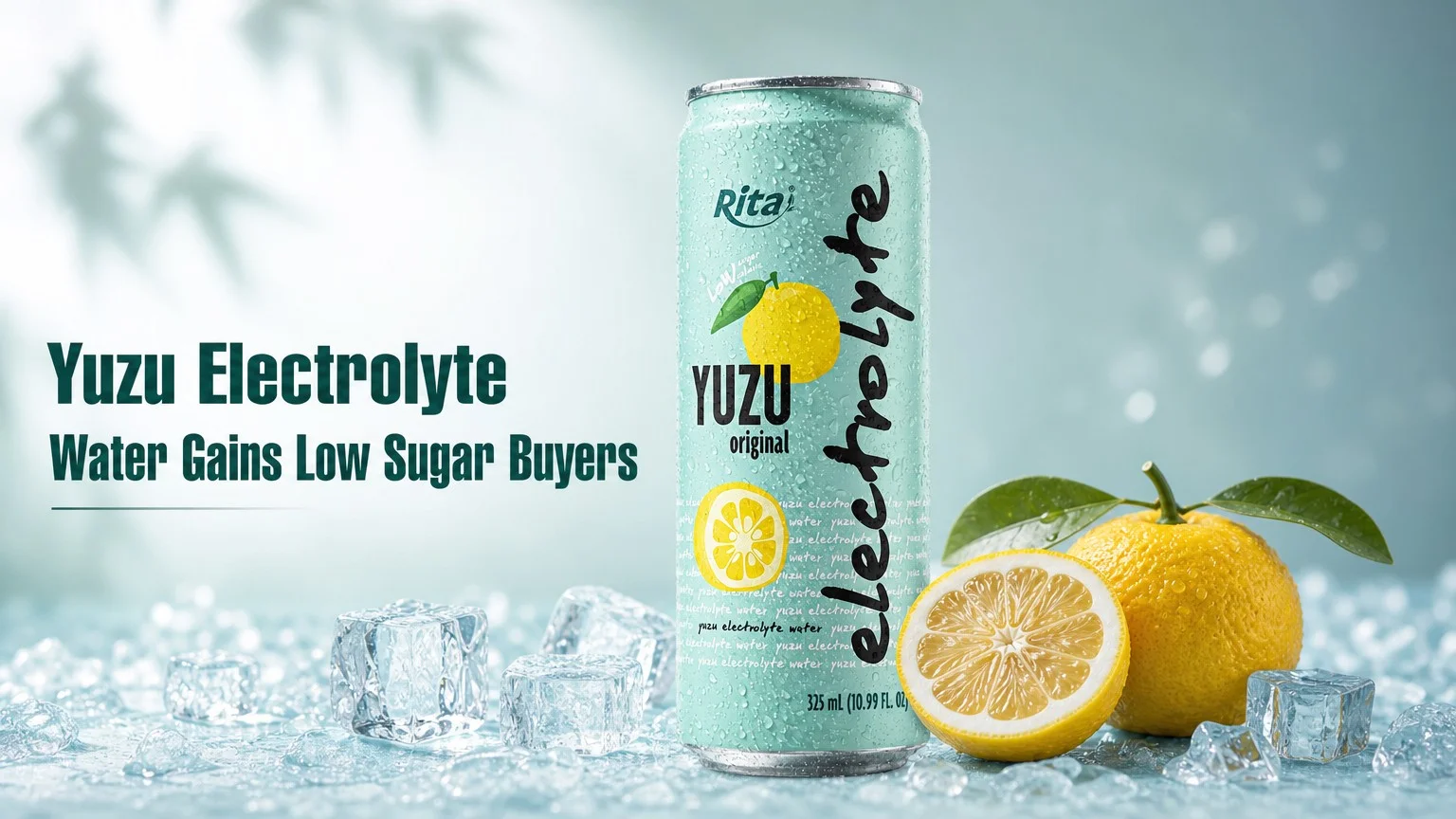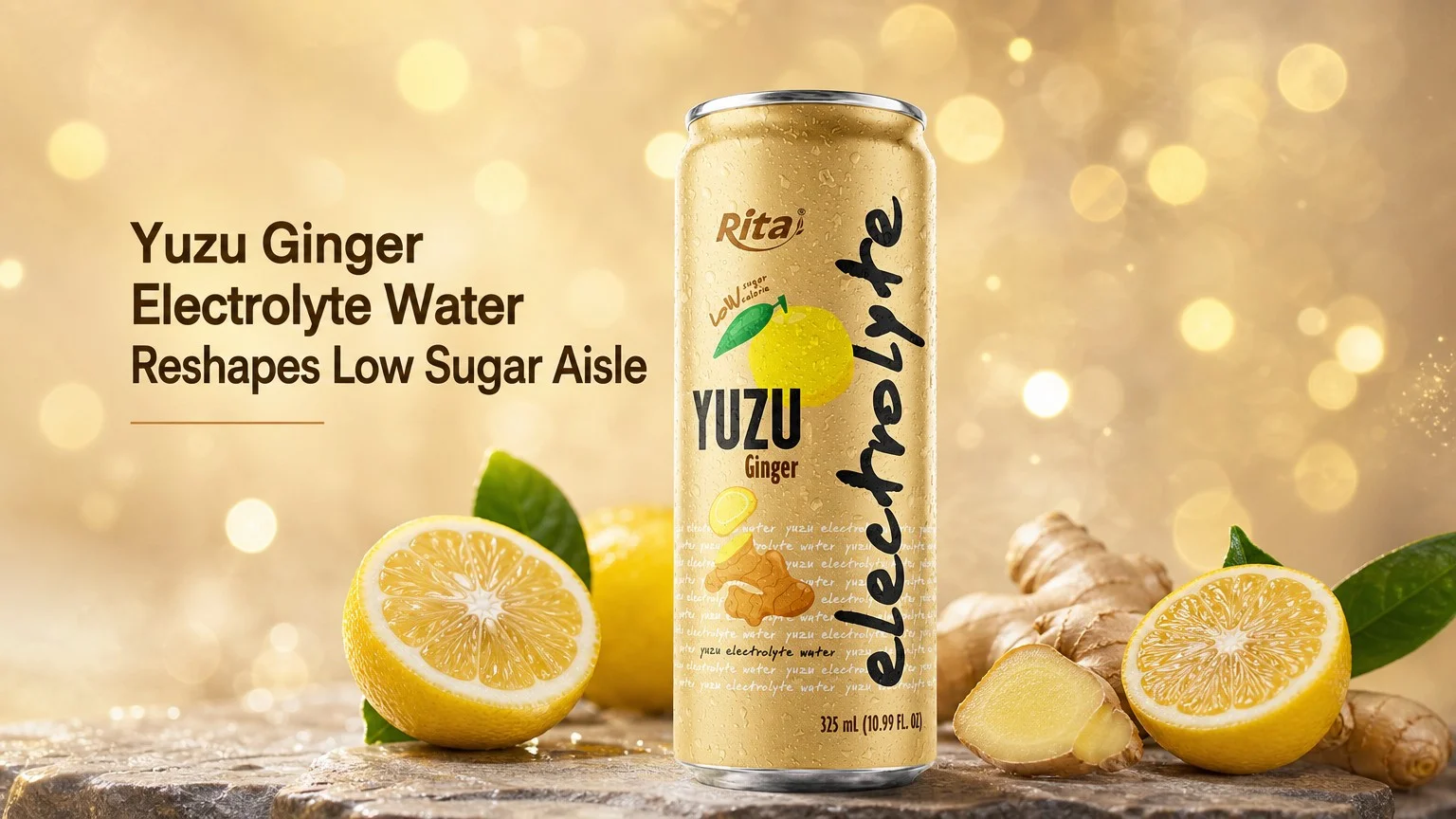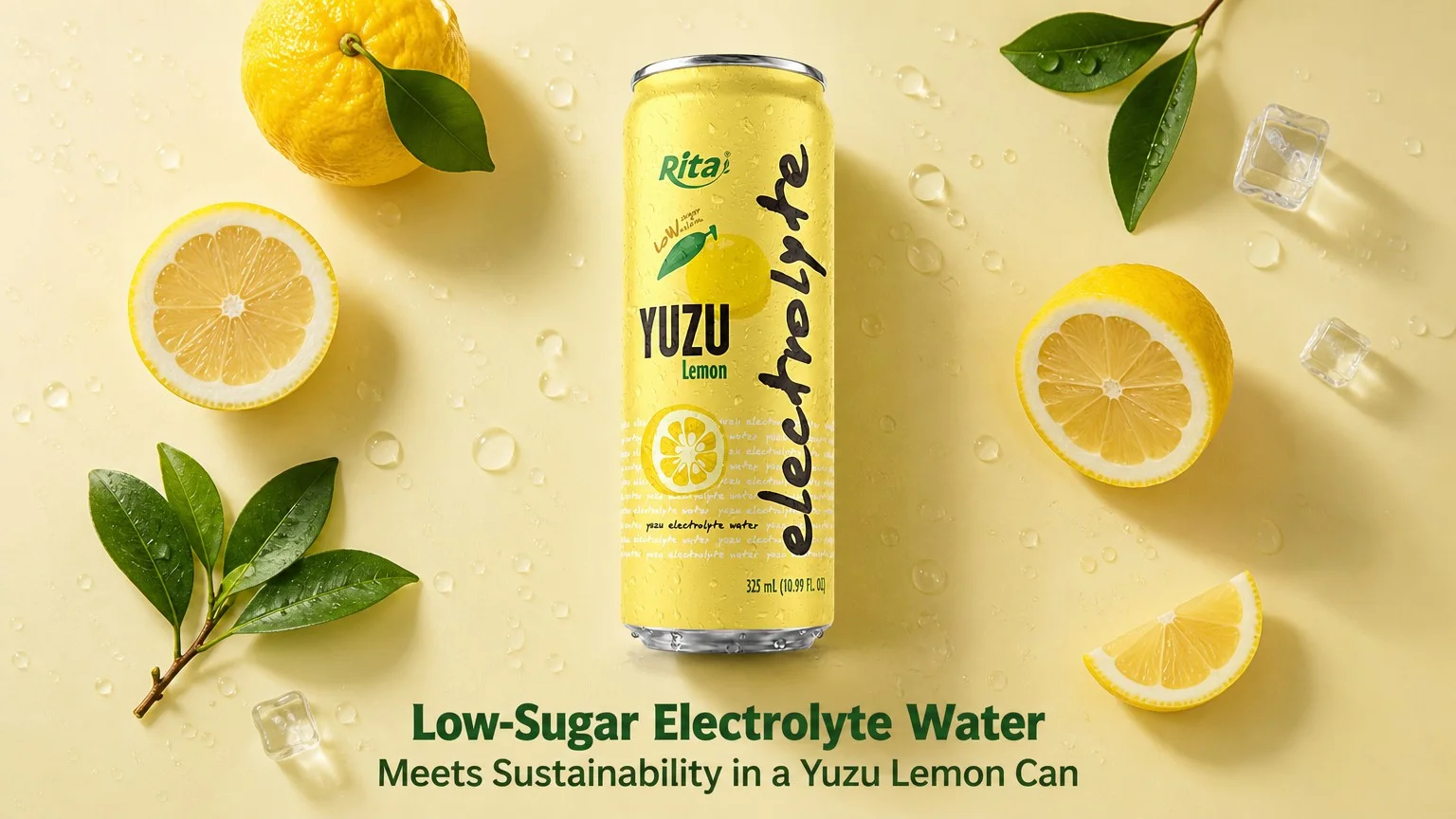
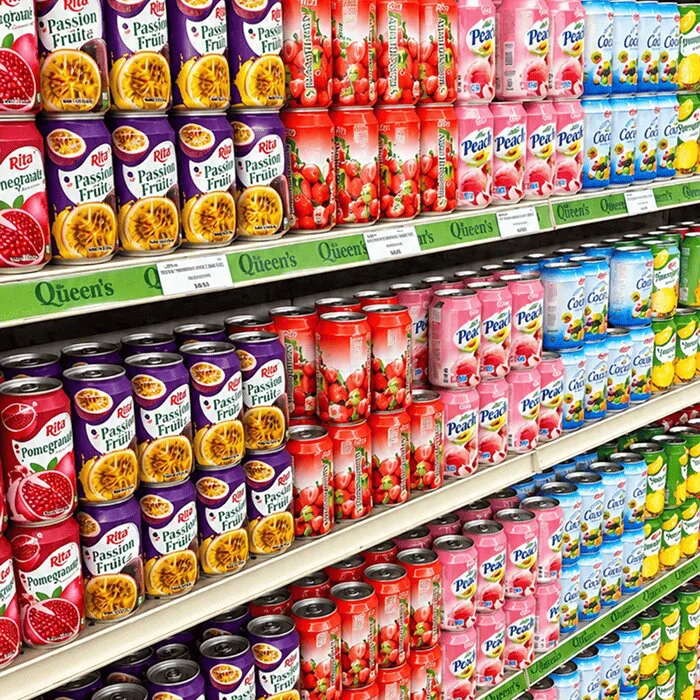

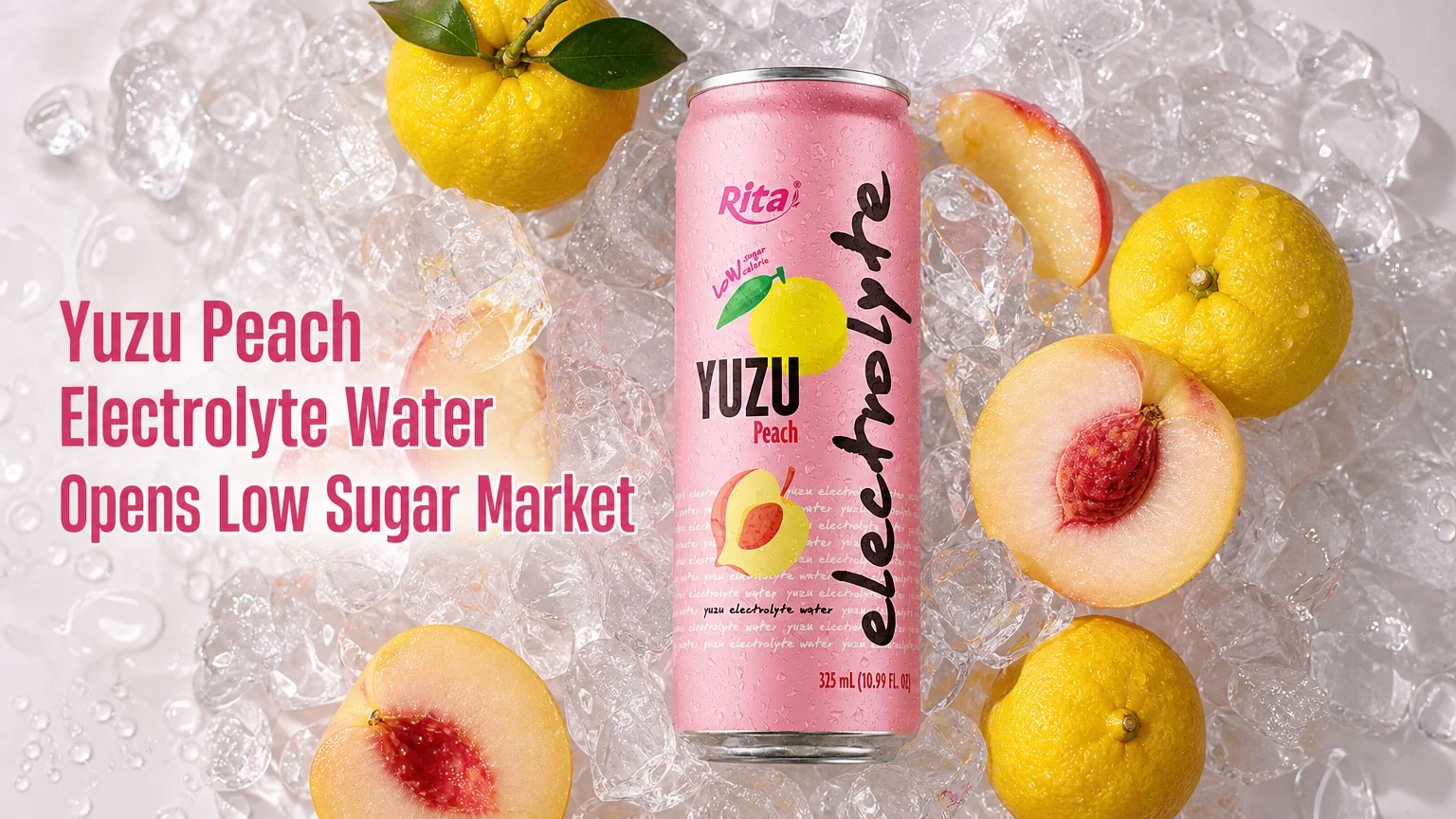
The global packaged beverage sector is entering a period of recalibration. As industrial disputes disrupt distilleries in Europe and legacy brands review underperforming assets, exporters with agile portfolios are positioning themselves around the next high-velocity categories, and low-sugar hydration beverages are among them. RITA Food & Drink Co., Ltd, the Vietnamese manufacturer established in 2004, is one of the suppliers betting on that shift, with the Yuzu Peach Electrolyte Water Drink 325ml, a low-sugar hydration beverage that pairs Japanese-style citrus character with soft peach notes in a slim aluminum can format designed for modern retail, travel and corporate channels across Asia and beyond.
Key Takeaways
- Yuzu Peach Electrolyte Water Drink 325ml is positioned as a low-sugar, fruit-flavoured electrolyte beverage supplied in an aluminum can
- RITA operates more than 50 automated production lines and reports exports to 200+ countries and territories
- India's expanding retail, quick-commerce and HoReCa channels offer multiple entry points for the category
- Coverage references include Halal, BRC, FSSC 22000, ISO 22000, HACCP and GMP systems
- OEM, private label and flexible MOQ terms support distributor and private label programmes
Yuzu Peach Electrolyte Water Meets a Growing Hydration Market in India
Low-sugar hydration drinks are no longer a niche experiment in Indian retail — they are becoming a planned category.
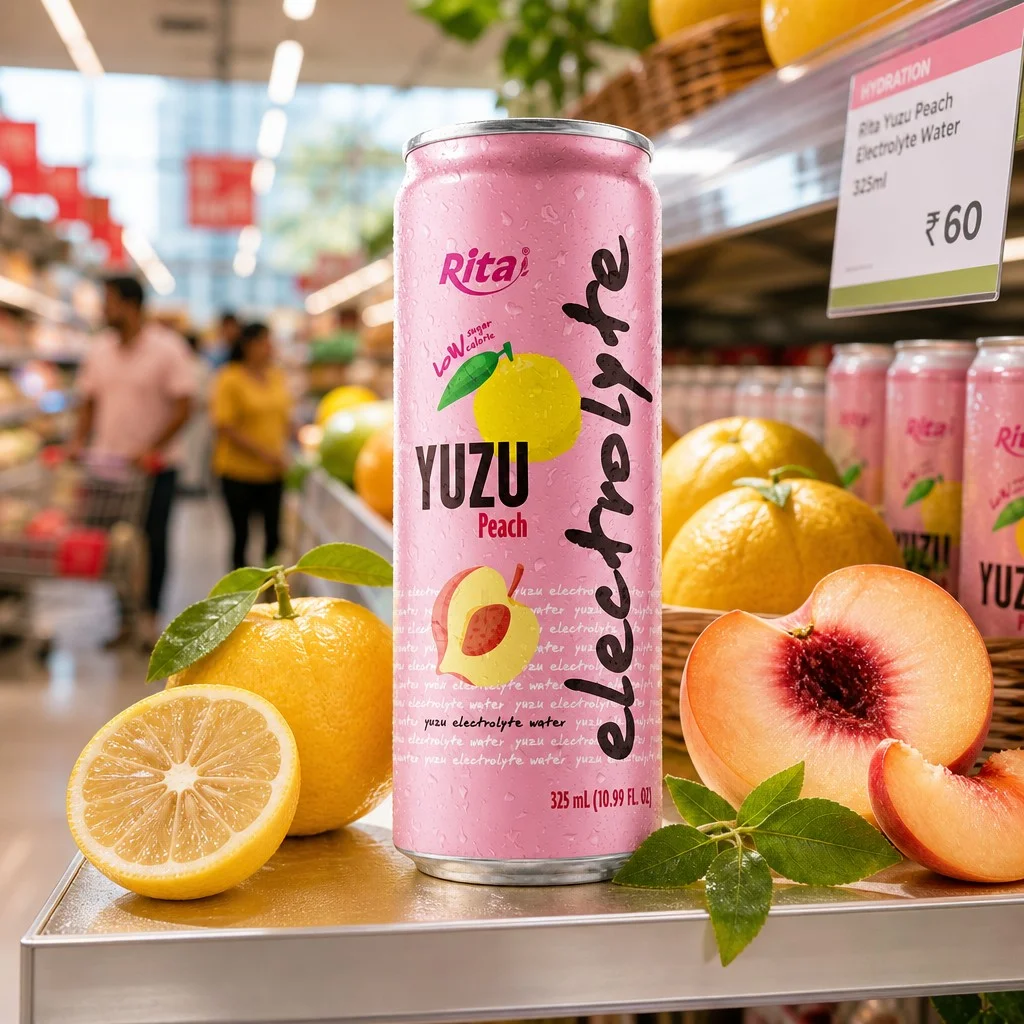
The opportunity is spread across India's major consumption hubs: Maharashtra, Delhi, Karnataka, Tamil Nadu, Gujarat, Uttar Pradesh, West Bengal, Rajasthan, Kerala, Andhra Pradesh and Telangana. Modern trade outlets, quick-commerce platforms and premium convenience formats are all expanding shelf space for electrolyte beverages alongside juices, teas and soft drinks, and the product has been positioned as a hydration beverage for India's fast-moving channel mix rather than a single-store novelty.
The backdrop matters. Diageo has been managing industrial action at its Cameronbridge distillery while simultaneously absorbing the closure of the Guinness Open Gate site and the dismissal of a Tequila lawsuit in the United States. Scotch producer Holyrood has paused production, and Australian Vintage has moved to sell its Nepenthe cellar door and vineyard. When established beverage groups are restructuring assets, challengers with lean cost structures and export-ready supply chains find room to build distribution in markets where legacy players are pulling back attention and shelf space.
Why Consumers Are Shifting to Low Sugar Hydration Drinks
Retail buyers report that shoppers scan the front of a can for sugar content before they read the flavour name.
Search behaviour in quick-commerce apps shows buyers comparing terms such as low sugar electrolyte drink, electrolyte water drink and fruit-based hydration beverage before items are added to cart. That vocabulary shift has a practical consequence for importers: category sets are being rebuilt around clarity of format rather than brand familiarity, which favours products that communicate their positioning in a single glance.
Yuzu, the tart Japanese citrus, has become a shorthand for premium refreshment in pan-Asian and global markets, while peach adds a familiar sweetness that broadens appeal beyond citrus specialists. Combining both in a single 325ml format gives distributors a compact shelf story to tell in quick-commerce listings, corporate gifting programmes and impulse coolers, without requiring shoppers to navigate a complicated flavour narrative.
For category managers, the practical advantage is merchandising simplicity. A single can SKU can sit in the hydration set, the juice and tea adjacency, and the checkout cooler — which is exactly how the category is being trialled in metro stores across the states listed above.
- Modern trade chains and supermarket sets across Tier-1 metros and Tier-2 growth cities
- Quick-commerce and delivery platforms that favour compact, high-velocity can formats
- Corporate gifting programmes and event sampling initiatives
- HoReCa menus, including hotel breakfast counters and airline-style beverage trays
- Premium convenience stores near transit hubs and business districts
Category Positioning and Competitive Shelf Dynamics
On shelf, the buyer's question is rarely whether a product tastes pleasant — it is whether the format, price band and story fit an established planogram.
A 325ml aluminum can carries an accessible trial price point, a 24-month shelf life and a design language that reads premium without demanding a premium-tier fixture placement. In India's competitive hydration and juice aisle, that combination matters because distributors are asked to justify every SKU against planogram space rather than against brand storytelling alone.
| Format | Typical retail role | Flavour range | Packaging profile |
|---|---|---|---|
| 325ml aluminum can (Yuzu Peach Electrolyte Water) | Hydration set, impulse cooler, travel retail | Citrus–peach electrolyte profile | Lightweight aluminium, slim profile |
| 500ml PET bottle | Grocery aisle, mass hydration | Juice and tea variations | Clear visibility, value packs |
| 500ml PP bottle | Take-home and canteen supply | Fruit and tea blends | Lower cost, resealable formats |
| Glass bottle | Premium food service and hampers | Juices and concentrates | Premium feel, higher logistics cost |
Source: RITA packaging portfolio and retail category observation.
That mix matters because modern trade buyers increasingly want a portfolio rather than a single hero SKU. Distributors who pair a fruit-based hydration line with broader non-alcohol ranges typically have an easier conversation at chain level, particularly when the category is being allocated space during festival and summer trading windows.
Inside the Yuzu Peach Electrolyte Water Product Profile
The product itself is deliberately simple: fruit flavour, electrolytes, low sugar, and a can that travels well.
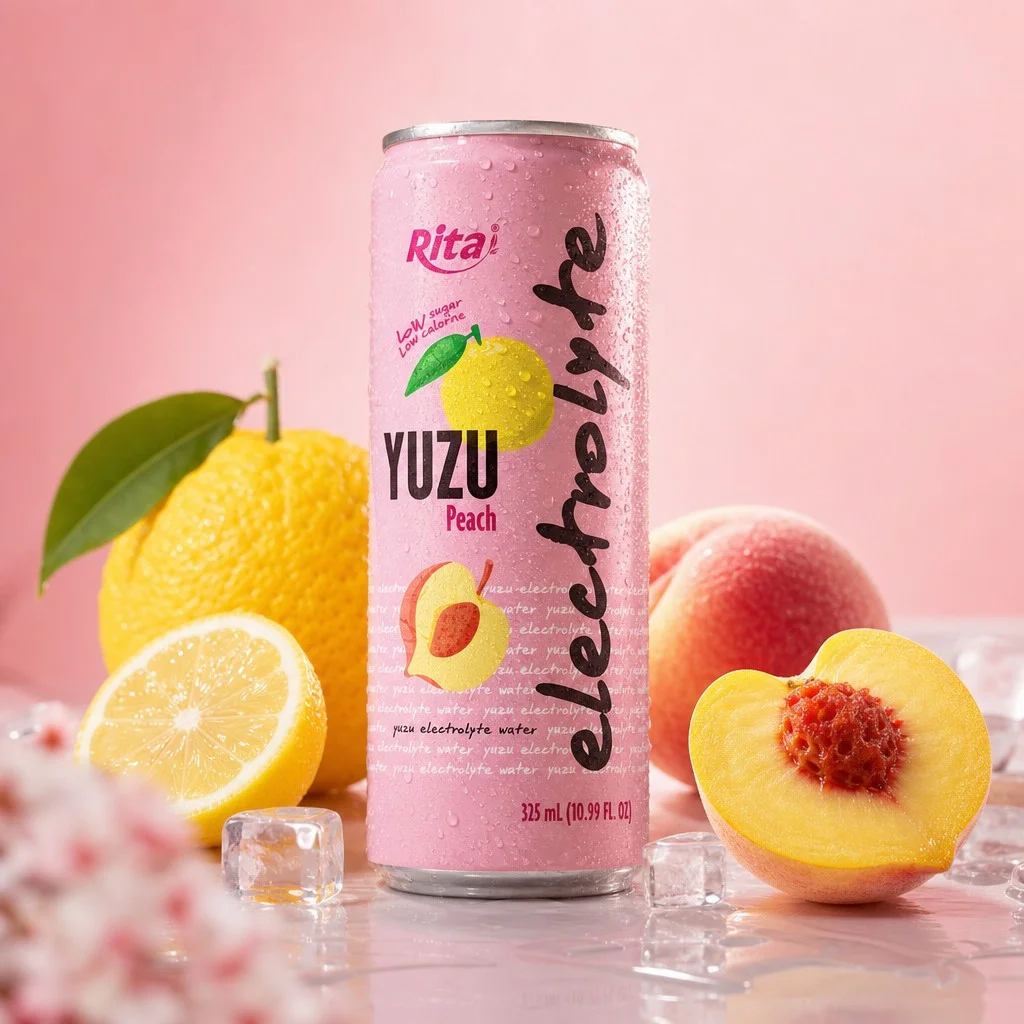
Taste Notes, Yuzu Citrus and Peach Character
The Yuzu Peach Electrolyte Water leads with a bright citrus top note from yuzu, supported by a rounded peach finish.
It is designed to be consumed cold, straight from the can, with the clean, light impression that modern consumers associate with the hydration category rather than with heavy syrups or dense carbonation. For buyers testing yuzu as a new flavour territory, the peach element keeps the profile approachable for first-time tasters who already know mango, guava and orange from the wider juice aisle.
The low-sugar formulation is central to the commercial pitch. With shoppers across India's urban centres comparing front-of-pack figures in real time, a beverage that leads with a reduced-sugar electrolyte story removes the most common objection at the point of sale. The 325ml volume also supports single-serve trial purchases, which matters in a market where awareness for yuzu-flavoured products is still being built alongside familiar staples.
Aluminum Can Packaging, Shelf Life and Supply Structure
From a logistics standpoint the pack is straightforward: a 325ml aluminum can with a 24-month shelf life.
Each unit ships from Ho Chi Minh Port with a confirmed lead time of 20 to 25 days after order confirmation, and a minimum order quantity of 200 cartons that the manufacturer describes as flexible for larger programmes. Payment terms cover L/C, T/T, Western Union, MoneyGram and PayPal, which keeps the commercial structure familiar to buyers already sourcing from other Southeast Asian suppliers.
RITA also maintains free sample requests and free design support for buyers evaluating private label or co-branded variants before committing to a production run, and the full specification — including certifications, packaging options and volume tiers — is available on the Yuzu Peach Electrolyte Water product page, where buyers can download the current catalogue before requesting a quotation.
| Attribute | Specification |
|---|---|
| Volume | 325 ml |
| Packaging | Aluminum can |
| Shelf life | 24 months |
| Minimum order quantity | 200 cartons (flexible MOQ) |
| Port of shipment | Ho Chi Minh Port, Vietnam |
| Lead time | 20–25 days after order confirmation |
| Payment terms | L/C, T/T, Western Union, MoneyGram, PayPal |
| Certification references | Halal, BRC, FSSC 22000, ISO 22000, HACCP, GMP (product-specific) |
Source: product specification published by RITA.
That combination — a compact pack, a long shelf life and transparent trade terms — is what makes the SKU attractive to first-time importers testing the electrolyte category before committing to larger container volumes.
From Orchard to Can Raw Material Sourcing
Flavour credibility in this category starts in the field, not in the lab.
RITA's fruit sourcing programme centres on Vietnam's agricultural regions, where peach and citrus-based inputs are handled alongside the tropical fruits that dominate the company's wider portfolio. Buyers reviewing traceability documentation can read more about RITA's raw material sourcing area in the Mekong Delta, the region the company describes as its high-quality ingredient base for beverage production.
A field-level view of that sourcing programme is available at: https://www.youtube.com/watch?v=jiBixXjeG8A
For an electrolyte water line, raw material consistency shows up in the balance between yuzu-style citrus brightness and peach sweetness across production batches. That is why importers typically request pre-production samples and shelf-life verification before first shipment — the same discipline they apply to juice and tea lines when entering a new territory.
RITA OEM and ODM Capabilities for Indian Beverage Buyers
Behind the product sits a manufacturer built for scale export.
RITA Food & Drink Co., Ltd, established in 2004, operates a 30,000-square-metre production base supported by more than 50 automated lines and 100 cooperative farms, exporting to over 200 countries and territories with monthly throughput reported above 1,200 twenty-foot containers. For Indian buyers, the practical value is the option to develop a private label or co-branded variant without rebuilding supply infrastructure, and the company publishes its OEM service workflow for buyers who want to understand how development stages are structured. As a RITA OEM beverage manufacturer partner, the reference points that matter most are production scale, certification breadth and the flexibility of order quantities.
Private Label Opportunities Across Multiple States
Private label programmes typically begin with flavour briefs and packaging artwork rather than full formulation work.
Distributors building a portfolio across states can start with the RITA non-alcohol beverage catalogue to map complementary SKUs, and add fruit-based lines through the RITA fruit juice catalogue once the hydration line is established in a territory. That sequencing is increasingly how B2B beverage distributor programmes are structured, because chain buyers approve category sets rather than isolated products.
For buyers who want the hydration SKU already specified, the Yuzu Peach Electrolyte Water low sugar hydration beverage page provides the technical summary in one place: 325ml volume, aluminum can packaging, 24-month shelf life, certification references and current trade terms — the level of documentation most Indian compliance teams request before first order placement.
Export Logistics and Certification Credentials for Indian Importers
Compliance paperwork, not flavour, is usually what decides whether an import programme gets off the ground.
RITA's product documentation references internationally recognised food safety systems, and the company reports Halal, BRC, FSSC 22000, ISO 22000, HACCP and GMP coverage across its range, alongside export experience in markets including the United States, Europe, India, Southeast Asia, Africa and East Asia.
For Indian importers, that documentation set aligns with typical distributor onboarding requirements: food safety certification, shelf-life evidence, pack specification and logistics terms. Shipments depart Ho Chi Minh Port on a 20-to-25-day schedule after order confirmation, with L/C and T/T accepted, which keeps the commercial structure familiar to buyers already sourcing from other Southeast Asian suppliers. As an aluminum can beverage supplier serving 200+ countries and territories, RITA can also support staged container releases for importers testing a 325ml electrolyte water SKU before scaling.
The category entry point is worth noting too. Rather than launching a single SKU, importers who plan distribution across Maharashtra, Delhi, Karnataka, Tamil Nadu, Gujarat, Uttar Pradesh, West Bengal, Rajasthan, Kerala, Andhra Pradesh and Telangana typically test the hydration line alongside established juice and tea ranges, using quick-commerce listings and sampling campaigns to measure repeat purchase before committing to larger volumes.
That staged approach is now the default entry strategy in Indian beverage distribution.
Frequently Asked Questions
What is Yuzu Peach Electrolyte Water Drink 325ml?
It is a fruit-flavoured electrolyte beverage from RITA that combines yuzu citrus and peach notes in a low-sugar formulation, supplied in a 325ml aluminum can for retail, travel and corporate channels. The full listing is available on the product page.
What packaging and shelf life does the product offer?
Each unit is packed in a 325ml aluminum can with a 24-month shelf life, shipped from Ho Chi Minh Port with an expected lead time of 20 to 25 days after order confirmation, and supported by free sample requests for evaluation before production runs.
What certification systems does RITA reference for this beverage?
RITA's range is produced under internationally recognised food safety systems, with Halal, BRC, FSSC 22000, ISO 22000, HACCP and GMP coverage referenced across the portfolio; buyers should confirm which certifications apply to this specific SKU with the sales team.
Can RITA provide OEM or private label versions for the Indian market?
Yes. RITA offers OEM and private label production for the hydration category, including flavour briefs, artwork support and flexible MOQ terms, and buyers can review the company's OEM service workflow before requesting a quotation.
What are the order quantities and delivery terms?
The minimum order quantity is listed at 200 cartons and is described as flexible for larger programmes; payment terms include L/C, T/T, Western Union, MoneyGram and PayPal, with FOB pricing available through the sales channel. RITA operates as a Vietnam fruit drink exporter shipping to more than 200 countries and territories.